Home Electrification Melbourne
Home Electrification Melbourne Without the Multi-Contractor Mess
Helcro Electrical is a 100% Australian-owned electrical contractor and CEC-accredited solar retailer based in Cheltenham, and one of the few local providers who can deliver an entire home electrification project ourselves: solar and battery, air conditioning, cooktops, EV chargers, and the switchboard and mains upgrades that tie it all together, under one team, one warranty, one point of contact.
We'll get back to you within one business day.
What we cover, start to finish
Every stage of an electrification project, under one roof
5.0★ Google (65 reviews)
5.0★ Oneflare (64 reviews)
Home electrification, sometimes called whole-home electrification, means moving your house off gas and onto efficient, all-electric equipment: solar and battery power, reverse-cycle heating and cooling, induction cooking, electric hot water, and EV charging, all run through electrical infrastructure built to carry it. Whether you’re planning a full gas to electric conversion or switching one appliance at a time, the switchboard and mains capacity behind it all still needs to be right.
If you’re researching how to electrify your home in Victoria, it’s also become one of the more cost-effective renovations available, with Solar Victoria, the federal Cheaper Home Batteries Program and the Victorian Energy Upgrades (VEU) program all offering support toward the switch.
Why Most Electrification Projects Stall on the Switchboard
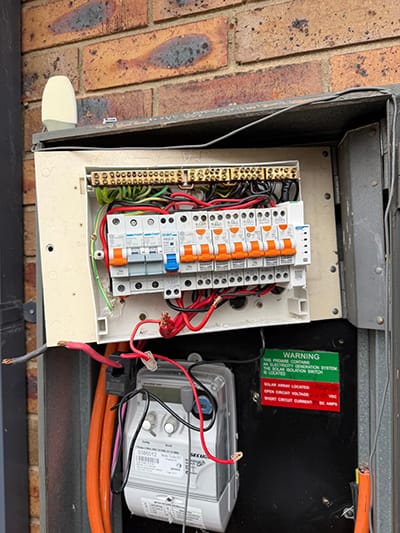
Most homeowners start electrifying with the part that's easiest to picture, solar panels, a battery, an EV charger, and only find out partway through that their switchboard can't actually carry the extra load. In a lot of Victorian homes the switchboard and mains supply were sized decades ago for gas heating and a couple of power circuits, not for a battery inverter, a 7kW EV charger and a ducted reverse-cycle system running at once. A 40-100A board that was standard for a gas-heated home is increasingly not enough once induction cooking, a heat pump, an EV charger and a battery are all drawing from it at the same time, which is why 200A has become the effective standard for a fully electrified home.
That's the gap that turns a single-trade electrification project into a stressful multi-contractor one: the solar installer quotes the panels, the air conditioning installer quotes the ducted system, and neither one owns the switchboard capacity question until it becomes a problem on install day.
Helcro assesses your switchboard and incoming electricity supply against the full electrification plan before any equipment is quoted, not after it's already been ordered. Where the board needs more circuits, RCDs or a larger-capacity upgrade, or where the mains supply itself needs upgrading (a common requirement for EV chargers and larger battery systems), we carry out that work ourselves, including liaising with your distributor where a supply upgrade is required. It's engineered to work together from the start, not bolted on piece by piece.
What's involved
Every Stage of Going Electric
Most homes electrify in stages: start wherever makes sense for your budget and your roof, and add the rest later. Everything below is designed to work together on the same switchboard and mains supply.
Solar & Battery Storage
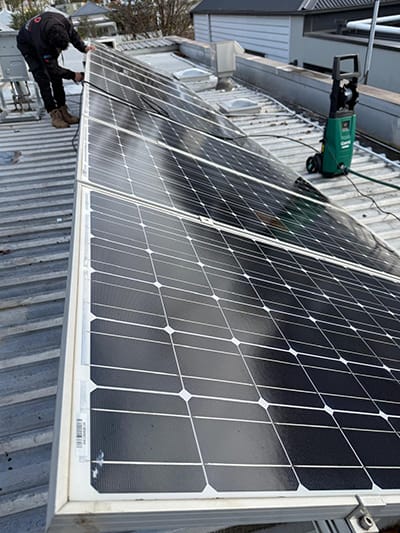
We design and install solar PV and battery storage systems sized to your home's actual usage, not just your roof space, with the solar installation itself carried out by our own CEC-accredited team. As a Clean Energy Council-accredited installer and NETCC Approved Seller, every system we quote follows the New Energy Tech Consumer Code, the industry standard covering honest quoting, no pressure-selling, and warranties that are actually honoured if something goes wrong.
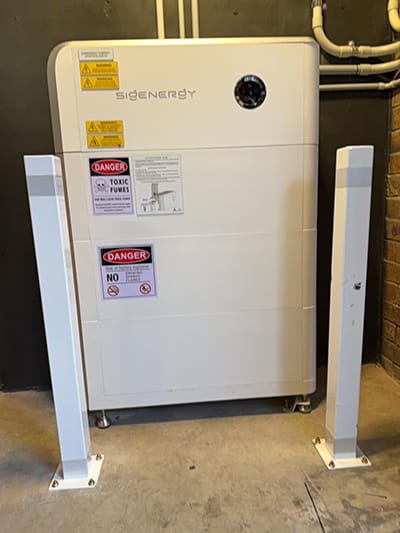
Most Victorian households installing a solar battery with us are eligible for support under the federal Cheaper Home Batteries Program, and we check and apply for that eligibility as part of your quote. The discount is scheduled to step down every six months, so installing sooner locks in a larger saving. Full detail on how the rebate works is in our battery rebate guide.
On the panel side, eligible households can still claim the Solar Victoria solar panel rebate, with an optional interest-free loan of the same value. That loan has to be opted into at the time of application rather than added later, so it's worth deciding on before the paperwork goes in. Solar Victoria applications are lodged by the homeowner rather than the installer, so we prepare everything you need and walk you through it as part of the same job.
- Solar PV design and installation (CEC-accredited)
- Battery storage matched to your system size and usage, including SiGENERGY, Tesla Powerwall, Sonnen and other batteries and brands we recommend
- Solar Victoria panel rebate and interest-free loan applications prepared and walked through with you, for eligible households
- Federal battery rebate eligibility checked and applied for as part of your quote
- NETCC-compliant quoting, contracts and after-sales support
Air Conditioning & Gas Decommissioning
Under the Victorian Energy Upgrades (VEU) program, switching from gas heating or gas hot water to efficient electric equipment can come with a substantial upfront discount, generated through Victorian Energy Efficiency Certificates (VEECs) and applied straight to your invoice. There's no separate rebate to claim afterwards.
Replacing central or ducted gas heating with reverse-cycle air conditioning: discounts vary with the system installed (single split, multi-head split, or ducted reverse-cycle) and your location, and are only available when the old gas heater is safely decommissioned as part of the job. If you're pricing a ducted system, our ducted air conditioning cost calculator will give you a starting figure before you book anything.
Decommissioning a gas hot water heater for a heat pump hot water system: a similar VEEC-based discount applies, and eligible owner-occupiers can combine it with Solar Victoria's hot water rebate. The two don't simply add together, because the Solar Victoria rebate is calculated after the VEU discount has already come off, but the combined reduction is still worth having. We'll confirm what both are worth for your system at quote stage.
Because VEEC values move with the certificate market, we confirm your exact discount at quote stage rather than publish a fixed figure, but as an accredited VEU provider we handle the certificate paperwork, the compliance requirements (safe decommissioning, minimum customer contribution, 5-year warranty on the new system) and the installation as one job.
VEU rebate-eligibleInduction Cooktops
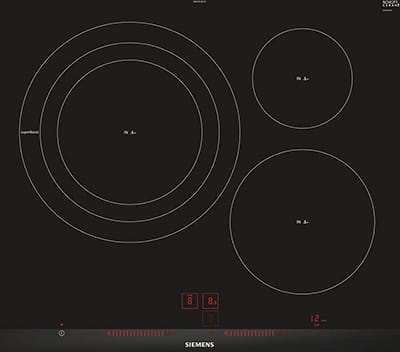
Swapping a gas cooktop for induction is often the easiest first step in electrifying a home: faster to cook with, easier to clean, and it removes one more gas connection from the house. There are also health benefits to moving off gas cooking that are worth reading up on before you decide. We supply and install induction cooktops matched to your existing benchtop cutout where possible, and wire in the dedicated circuit most induction cooktops need as part of the same visit.
EV Chargers
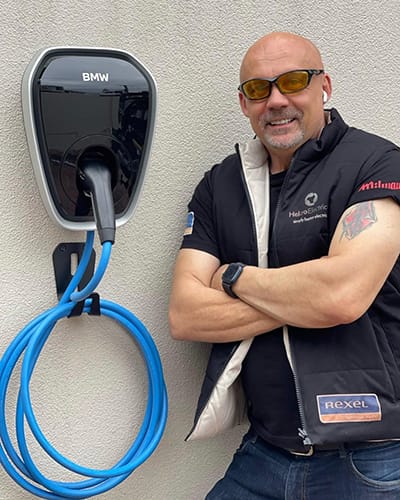
A dedicated home EV charger is faster and safer than charging from a standard powerpoint, and in most cases it's a straightforward job, provided the switchboard has the capacity. We install EV chargers from major brands, assess whether your existing switchboard and mains supply can support it, and where it can't, we handle that upgrade as part of the same project rather than sending you to find a second contractor.
Switchboard Upgrades & Electrical Mains Upgrades
Solar, batteries, reverse-cycle air conditioning, induction cooking and EV charging all add real load to a switchboard that, in a lot of Victorian homes, was never designed to carry it. Before we install any electrification equipment, we assess your existing switchboard and incoming electricity supply against the new demand, and carry out any switchboard and mains upgrade ourselves as part of the same job.
No obligation, no pressure, no hard sell.
Where to Start: Sequencing a Staged Electrification
Most homes don’t go all-electric in one project, and there’s no reason they should. What matters is the order, because some decisions quietly constrain the ones after them, and some timing isn’t yours to control.
Always first: the switchboard and mains assessment. It isn't the interesting part, but it's the only step that determines what the rest of the plan can actually include. Finding out your board is full after the battery is on the roof turns one job into two, and the second one is always more expensive than it needed to be. This assessment is free, takes one visit, and either clears the way for everything else or tells you what to budget for. Here's what we look at during a home energy assessment.
If a gas appliance is close to the end of its life, start there. A gas hot water system or ducted heater that's already 12 to 15 years old is the easiest starting point, because the VEU discount applies at the point of replacement and the old unit has to be decommissioned anyway. Hot water is usually the biggest energy drain in the house, so it also tends to be the change you notice first on a bill. It also puts you ahead of the March 2027 rule rather than behind it: once that lands, a failed gas hot water system has to be replaced with an electric one regardless, and a failure is a bad time to be comparing quotes.
If your gas appliances are healthy but your roof is good, start with solar and battery. There's no reason to rip out equipment that's still working. Where a roof suits a decent-sized system and the household uses power through the day, solar and storage usually generate the fastest return, and the federal battery discount steps down every six months, so the timing genuinely favours sooner.
If an EV is on the horizon, plan the charger before you need it. The charger itself is a small job. The supply upgrade it sometimes triggers is not, and it's the one people discover the week the car arrives. Even if you're a year or two away, having the capacity question answered now means the charger install stays a charger install.
If nothing is forcing your hand, the usual order is switchboard assessment, then solar and battery, then gas appliances as they reach end of life, then EV charging when the car does. Induction cooking slots in wherever the kitchen budget allows, since it's the least dependent on everything else.
Built for Melbourne's South East Housing Stock
Helcro is based in Cheltenham and works across 25+ suburbs through Melbourne’s south east and Bayside. That matters more for electrification than it does for most electrical work, because what’s behind the wall varies street by street around here.
In Brighton, Hampton and Sandringham, a lot of the housing stock is period homes that have been extended once or twice, often still running an original board with decades of additions layered onto it. Those homes frequently need the switchboard and mains sorted before anything else can go ahead, and rewiring and upgrading an older home needs doing sympathetically where the building fabric is original.
Through Cheltenham, Highett, Moorabbin, Mentone and Parkdale, the post-war brick veneer stock tends to have boards sized for a very different household: gas heating, gas hot water, a handful of power circuits and no expectation of a car charging in the driveway. These are usually straightforward upgrades, but they're rarely optional once you start adding electric load.
In Beaumaris and Black Rock, coastal exposure shapes equipment selection and mounting as much as the electrical design does. Across Bentleigh, Bentleigh East, Carnegie and Oakleigh, we see a mix, with newer builds and renovations often already part-way to being electrification-ready.
We'll tell you which of these your home is during the assessment, and what it means for the order of work, rather than quoting a generic package and finding out on install day.
Why Homeowners Choose Helcro Electrical
100% Australian Owned
Operating in Victoria for over 15 years.
CEC-Accredited Solar Retailer
Clean Energy Council quality standard.
NETCC Approved Seller
Honest quoting and no pressure-selling, by code.
VEU Accredited Supplier A003039
Handles the rebate paperwork and compliance directly.
How It Works
1. Book a free assessment, we walk your property and look at your existing switchboard, roof, gas appliances and existing electrical capacity.
2. Get a staged plan and fixed quote, we confirm what rebates you're eligible for and put together a plan for the parts of the job that make sense now, and what to add later.
3. One team installs it, solar, battery, air conditioning, cooktop, EV charger and any switchboard or mains work, coordinated as one project instead of separate trades.
Fixed quote confirmed before any work starts, no surprise costs.
Real Results, Real Homeowners
Katherine Gwon, Google Review
Common questions about Home Electrification
Do I have to electrify everything at once?
No. Most homeowners start with the highest-impact piece, usually solar, or replacing an ageing gas heater, and add the rest over time. We design each stage so it’s compatible with what comes next, particularly the switchboard and mains capacity.
What rebates am I actually eligible for?
It depends on your household, your property, and which equipment you’re installing. Solar panel rebates through Solar Victoria carry a household income cap, currently $150,000 (reduced from $210,000 on 1 July 2026), and Small-scale Technology Certificates, the mechanism behind both solar and battery discounts, step down on a set schedule, so installing sooner generally locks in a larger discount. The federal Cheaper Home Batteries Program and the Victorian Energy Upgrades (VEU) program each have their own separate eligibility criteria on top of this, and VEU discount amounts move with the certificate market. We confirm exactly what you qualify for, and what’s changed most recently, as part of your free assessment.
Do I have to decommission my old gas appliance to get the VEU discount?
Yes. For both the central/ducted gas heater and gas hot water pathways, safe decommissioning of the old gas appliance is a condition of the VEU discount, and we handle that as part of the installation.
Will my switchboard need to be upgraded?
Maybe, it depends on the board’s age and existing capacity versus the new load. We check this before quoting any equipment, and if an upgrade is needed we include it in the same project rather than leaving you to source a separate electrician.
Can I get an EV charger installed without doing solar?
Is Victoria actually banning gas in homes, or is that just talk?
Are you licensed and accredited to do all of this work?
More questions? See our full FAQs.
Ready to Take Your Home Off Gas?
Whether you’re starting with one piece or planning the whole project, Helcro Electrical designs and installs every part of home electrification, and handles the rebate paperwork along the way. The federal battery rebate steps down every six months, so the earlier your assessment, the more you lock in.
No obligation, no pressure, no hard sell. We’ll walk your property, confirm what rebates you’re eligible for, and put together a plan and fixed quote for the parts of the job that make sense for your home.
Call us
1300 201 358Email us
team@helcro.com.auVisit us
45/148 Chesterville Road, Cheltenham VIC 3192
Hours
Mon–Fri 8:00–18:00, Sat 8:00–13:00