Last updated: 2 November 2026
There is no single best solar battery in Australia, but for most homes we work on it is a SiGENERGY SigenStor. If you already have Enphase microinverters, an Enphase IQ Battery 5P usually fits the system you have, and if you want 13.5 kWh in one unit with a solar inverter built in, look at a Tesla Powerwall 3.
What decides it is your power supply, the solar you already have, whether you want blackout backup and how much power you use after dark. Helcro Electrical installs home batteries across Melbourne’s South East, and this guide compares the five brands we install: SiGENERGY, Tesla, Sonnen, Sungrow and Enphase.
How we wrote this guide: Helcro Electrical sells and installs all five brands here, so we are not a neutral reviewer. We only cover batteries we install, we say where another brand suits a home better than our most-installed one, and every specification comes from the maker’s own Australian datasheet, warranty or product page (linked under “How we checked this page”).
Key takeaways
- Most of the batteries we install are SiGENERGY SigenStor; Tesla Powerwall 3 and Enphase suit some homes better.
- Warranties differ in years, cycles and conditions, so read the fine print, not just “10 years”.
- The federal Cheaper Home Batteries Program takes about $250 to $270 per usable kWh off the first 14 kWh (October 2026); the rate drops on 1 January 2027, and eligibility depends on the exact battery and set-up.
On this page
- The short answer: which solar battery is best?
- How to choose the best home battery
- The solar battery brands we install
- What a home battery costs, and the federal discount
- Why the installer matters as much as the battery
- Home battery questions
- How we checked this page
- Get a home battery quote in Melbourne’s South East
The short answer: which solar battery is best?
For most homes we work on, the best solar battery is a SiGENERGY SigenStor. It is our most-installed battery, and we are a SiGENERGY Certified Installer. It comes in single-phase and three-phase versions, it grows in modules as your needs change, and the battery and its inverter come from one maker. It also came first in SolarQuotes’ 2026 Installer’s Choice survey of 125 installers, with 26% of the battery votes, ahead of Sungrow on 21%.
That doesn’t make it right for every house: the list and table below show which battery suits which home.
Best battery for each type of home
- Most homes we work on, single- or three-phase: SiGENERGY SigenStor. The battery and its hybrid inverter come from one maker, it grows in 5 kWh and 8 kWh modules up to 48 kWh, and the Sigen Energy Gateway adds backup.
- Homes with Enphase microinverters: Enphase IQ Battery 5P. It is AC-coupled with six microinverters built in, and its warranty runs 15 years or 6,000 cycles.
- Homes that want a lot of storage in one unit: Tesla Powerwall 3. It stores 13.5 kWh, has a solar inverter built in for up to 20 kW of panels, and takes up to three Expansion units.
- Homes that want backup built into the battery: Sonnen Batterie Evo. It is AC-coupled, single-phase, stores 10 kWh usable and gives 5 kW of backup power for the circuits wired as essential loads.
- Homes that want to add storage in small steps: Sungrow SBR. It stacks in 3.2 kWh modules from 6.4 to 25.6 kWh and pairs with a hybrid inverter.
Solar battery comparison table: 5 brands side by side
| Battery | Best for | How it connects | Usable storage | Backup | Maker’s warranty | Price from us |
|---|---|---|---|---|---|---|
| SiGENERGY SigenStor | one maker for battery and inverter | SiGENERGY Energy Controller (hybrid inverter), single- or three-phase | 5 kWh and 8 kWh modules (5.2 and 7.8 kWh usable), up to six | Sigen Energy Gateway | 10 years, battery and controller; 70% at 10 years or a set throughput; system kept online | 8 kWh from about $8,400 single-phase or $10,900 three-phase, supplied and installed, discount off (October 2026) |
| Tesla Powerwall 3 | lots of storage in one unit, solar inverter built in | solar inverter built in (up to 20 kW of panels) | 13.5 kWh, plus up to 3 Expansion units of 13.5 kWh | Backup Gateway 2 | 10 years, 70% at 10 years; internet connection for the full term | quoted after the site assessment |
| Sonnen Batterie Evo | backup built into the battery | AC-coupled, single-phase | 10 kWh (11 kWh nominal) | built in, 5 kW continuous | 10 years or 10,000 cycles; at least 80% of nominal capacity; internet connection for software updates | kit $9,680, equipment only |
| Sungrow SBR | adding storage in small steps | with a hybrid inverter | 3.2 kWh modules, 6.4 to 25.6 kWh | depends on the inverter; confirmed at the site assessment | 10 years, 70% at 10 years; monitored online | 16 kWh kit $11,500, equipment only |
| Enphase IQ Battery 5P | homes with Enphase microinverters | AC-coupled, six microinverters built in | 5 kWh per unit | IQ System Controller 3 INT | 15 years or 6,000 cycles; 70% at 10 years, 60% at 15; internet connection | $5,557 per battery, equipment only |
From each maker’s Australian datasheet, warranty or product page, checked 1 November 2026. Backup hardware and discount eligibility depend on the exact set-up.
Not sure which of these fits your home? Tell us about your power bills and your solar, and we’ll recommend one. Get a Quote or call 1300 201 358. We install across Melbourne’s South East. We respond within 2 business hours.
How to choose the best home battery
Single-phase or three-phase supply
Check whether your home has single-phase or three-phase power: it decides which inverter the battery needs and changes the price. SiGENERGY makes single-phase and three-phase Energy Controllers for the SigenStor, which is why our price guide lists both. We confirm your supply at the site assessment.
Your existing solar: AC-coupled or a hybrid set-up
A battery connects to your solar in one of two ways. An AC-coupled battery has its own inverter and connects to your switchboard separately from your solar inverter. The Enphase IQ Battery 5P has six microinverters built in, and Enphase lists it as compatible with its IQ7, IQ8 and S Series microinverters, so it can usually be added to an existing Enphase system.
Other batteries pair with a hybrid inverter that runs both the solar panels and the battery, like the SigenStor’s Energy Controller or the solar inverter built into the Tesla Powerwall 3.
Backup during a blackout
Not every battery set-up keeps the lights on in an outage. A SigenStor needs the Sigen Energy Gateway, a Powerwall 3 needs Tesla’s Backup Gateway 2, and an Enphase IQ Battery 5P needs the IQ System Controller 3 INT. The Sonnen Batterie Evo has backup built in (5 kW continuous) for the circuits wired as essential loads. For a Sungrow, backup depends on the hybrid inverter, which we confirm at the site assessment.
With the Sigen Energy Gateway, the SigenStor switches to backup without a noticeable break. Tell us which circuits matter to you, whether that is the fridge, the lights or more.
Size: usable kWh, and kW of output
Two numbers matter. Kilowatt-hours (kWh) are how much energy the battery stores; kilowatts (kW) are how much power it can deliver at once. Compare usable capacity, not the bigger nominal figure: a Sonnen Batterie Evo, for example, is 11 kWh nominal and 10 kWh usable.
Size a battery to the power you use in the evening and overnight, not to the federal discount. We work it out from your bills and usage at the site assessment.
Chemistry and warranty terms
The SigenStor, Sonnen, Sungrow and Enphase batteries we install all use lithium iron phosphate (LFP) cells. Tesla doesn’t state the cell chemistry in its Australian Powerwall 3 datasheet.
Read past the headline years. Some warranties end after a number of cycles, some guarantee a minimum capacity, and all five expect the battery to stay online: SiGENERGY cuts its cover to five years if the system is offline for over a year, Tesla may not honour the full 10 years, and Sonnen, Sungrow and Enphase also write internet connection or monitoring into their warranties. Each brand’s terms are below.
The solar battery brands we install
SiGENERGY SigenStor
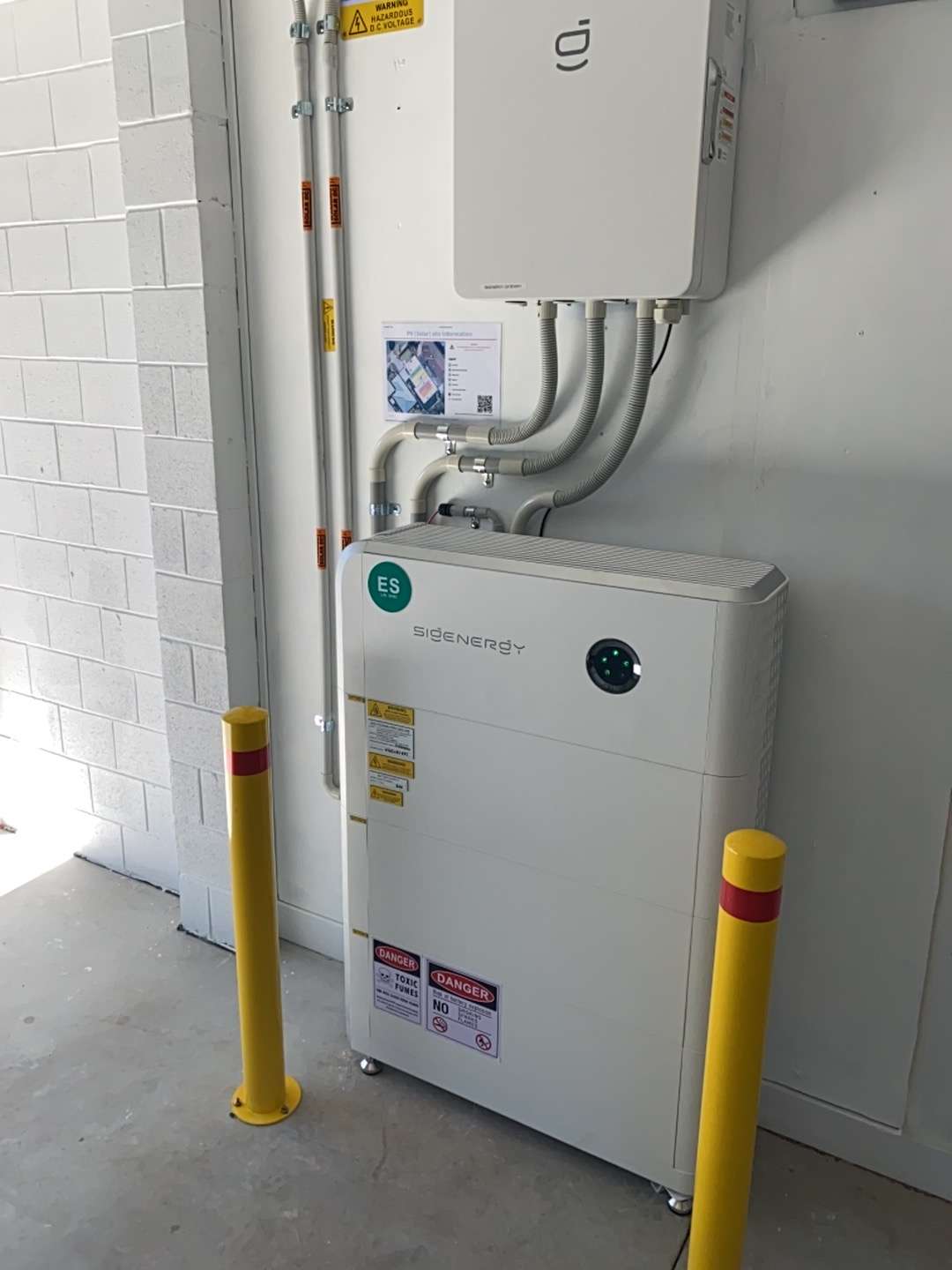
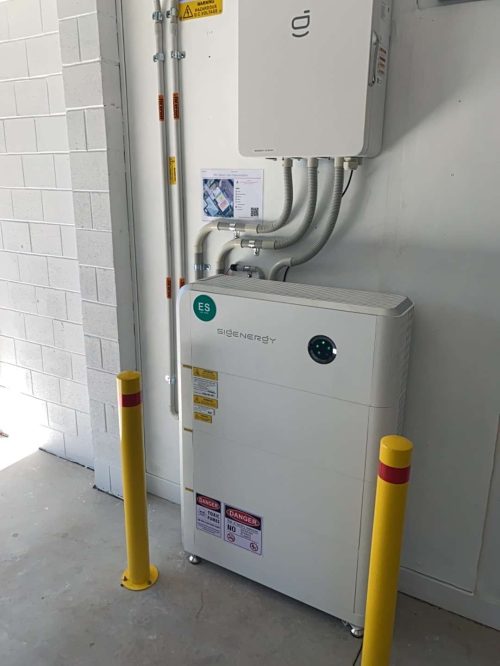
We fit the SigenStor in 5 kWh and 8 kWh LFP modules, up to six per Energy Controller (up to 48 kWh), so a home can start small and add modules later (the federal discount can be claimed only once at an address). Its Energy Controller is the hybrid inverter, in single-phase or three-phase versions.
SiGENERGY’s warranty covers the battery and the Energy Controller for 10 years, with at least 70% of the battery’s usable energy at 10 years (or a set energy throughput, if that comes first). The full term needs the system kept online; if it is offline for over a year, SiGENERGY’s cover drops to five years.
SiGENERGY’s EV chargers also work with the SigenStor (we install EV chargers too), and a diesel generator can be connected through the Sigen Energy Gateway. Where the charger and your system allow it, we set the charger up so it doesn’t charge the car from your home battery. SigenStor prices are on our solar battery installation page.
Tesla Powerwall 3
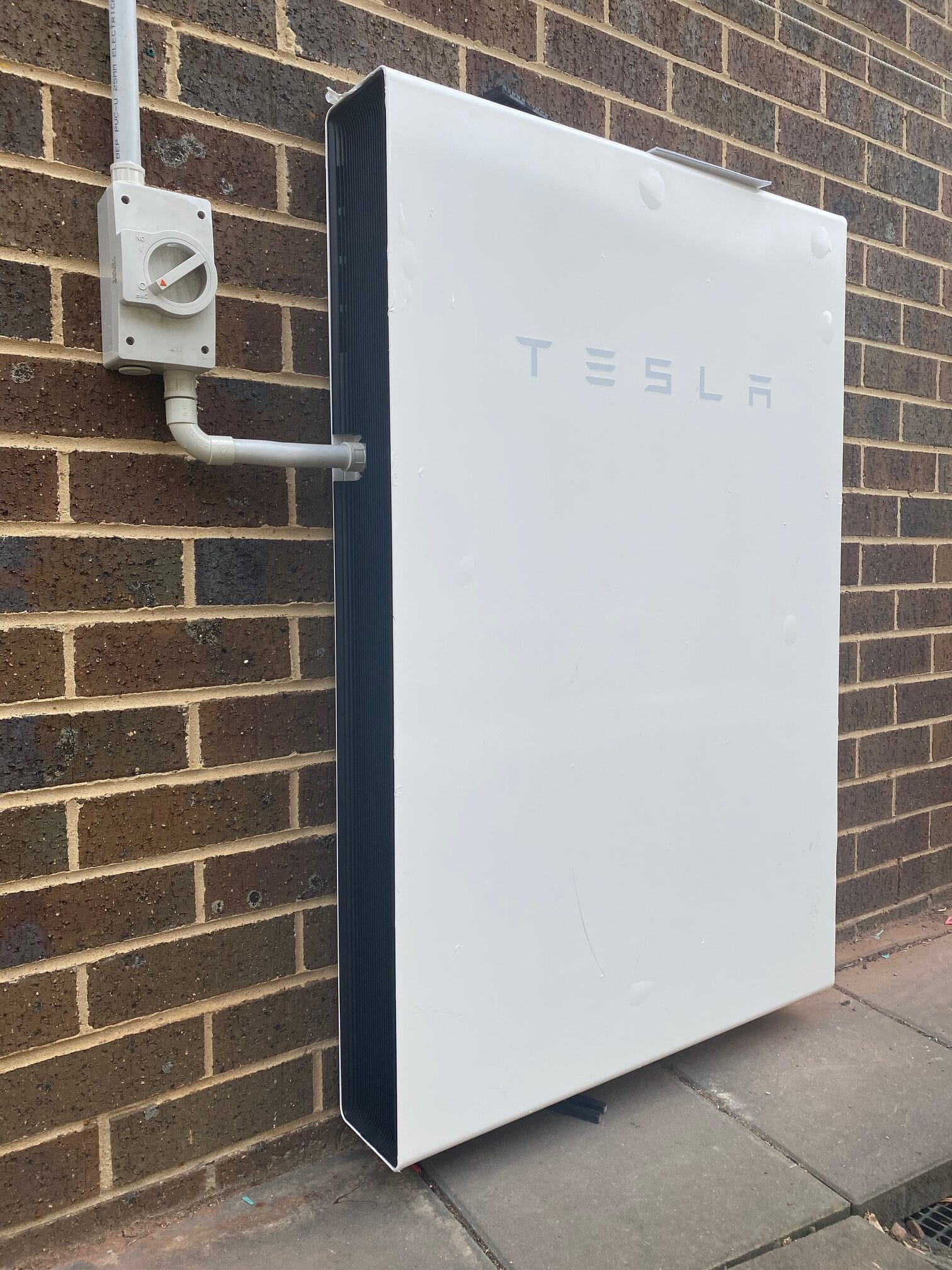
We are a Tesla Powerwall Certified Installer. The Powerwall 3 stores 13.5 kWh of usable energy (Tesla datasheet) and has its own solar inverter built in, taking up to 20 kW of solar panels and delivering up to 11.04 kW of continuous power. You can add up to three Powerwall 3 Expansion units of 13.5 kWh each. Backup needs Tesla’s Backup Gateway 2.
Tesla’s Australian warranty is 10 years, with at least 70% of the 13.5 kWh capacity at 10 years. If the Powerwall isn’t kept connected to the internet, Tesla says it may not honour the full 10 years, though it will always honour at least four. We quote a Tesla Powerwall installation after the site assessment.
Sonnen Batterie Evo
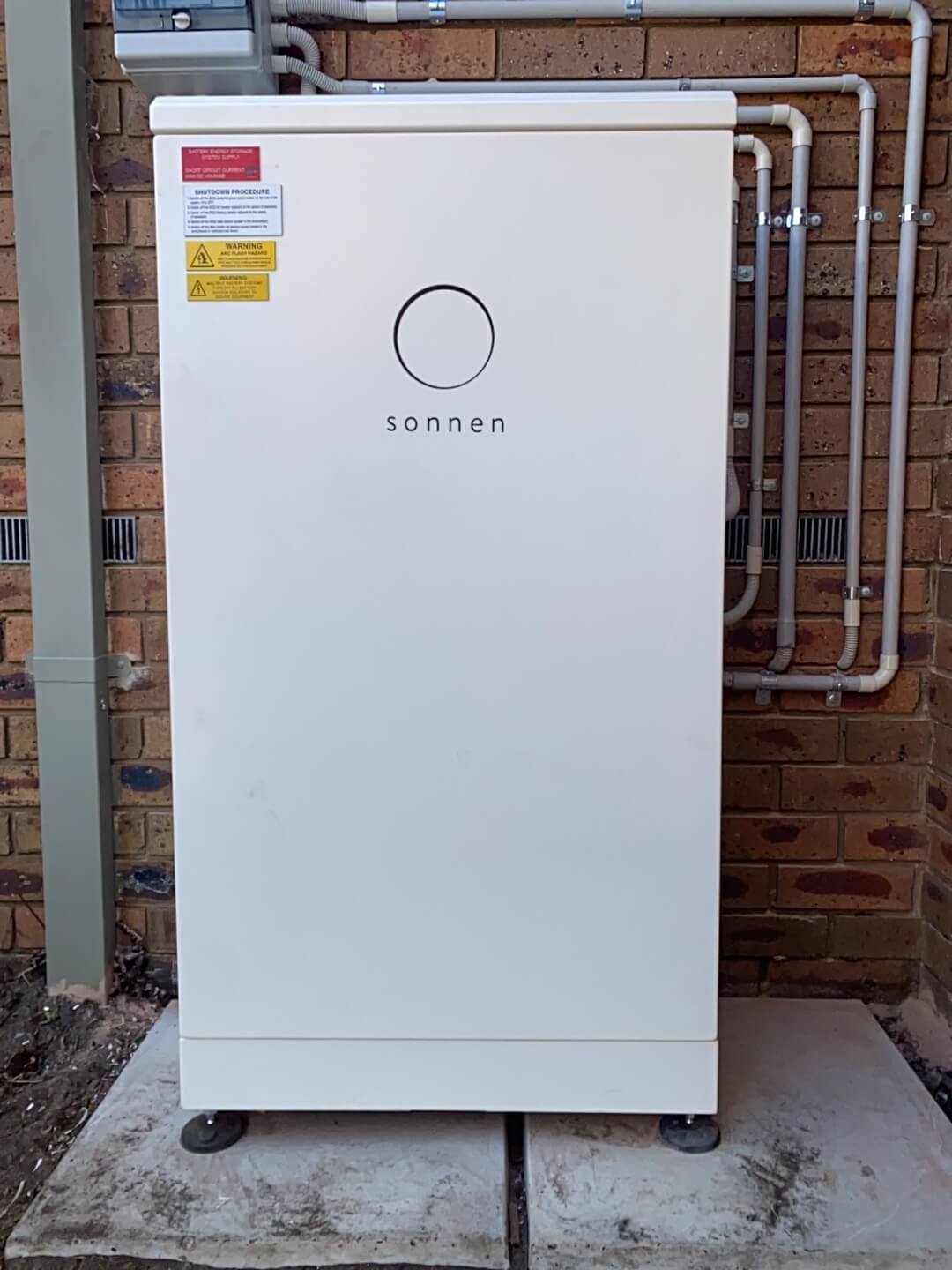
We are a Sonnen Certified Partner. The Sonnen Batterie Evo is 11 kWh nominal and 10 kWh usable, made up of two 5 kWh modules with LFP cells. It is AC-coupled, connects to a single-phase supply and has backup built in: 5 kW continuous for the circuits wired as essential loads, once the installer connects the backup function.
Sonnen’s warranty is 10 years or 10,000 cycles, whichever comes first (Sonnen’s Evo page), and its Australian warranty says the capacity will not fall below 80% of the nominal capacity during that time. The Sonnen Batterie Evo kit is in our shop.
Sungrow SBR
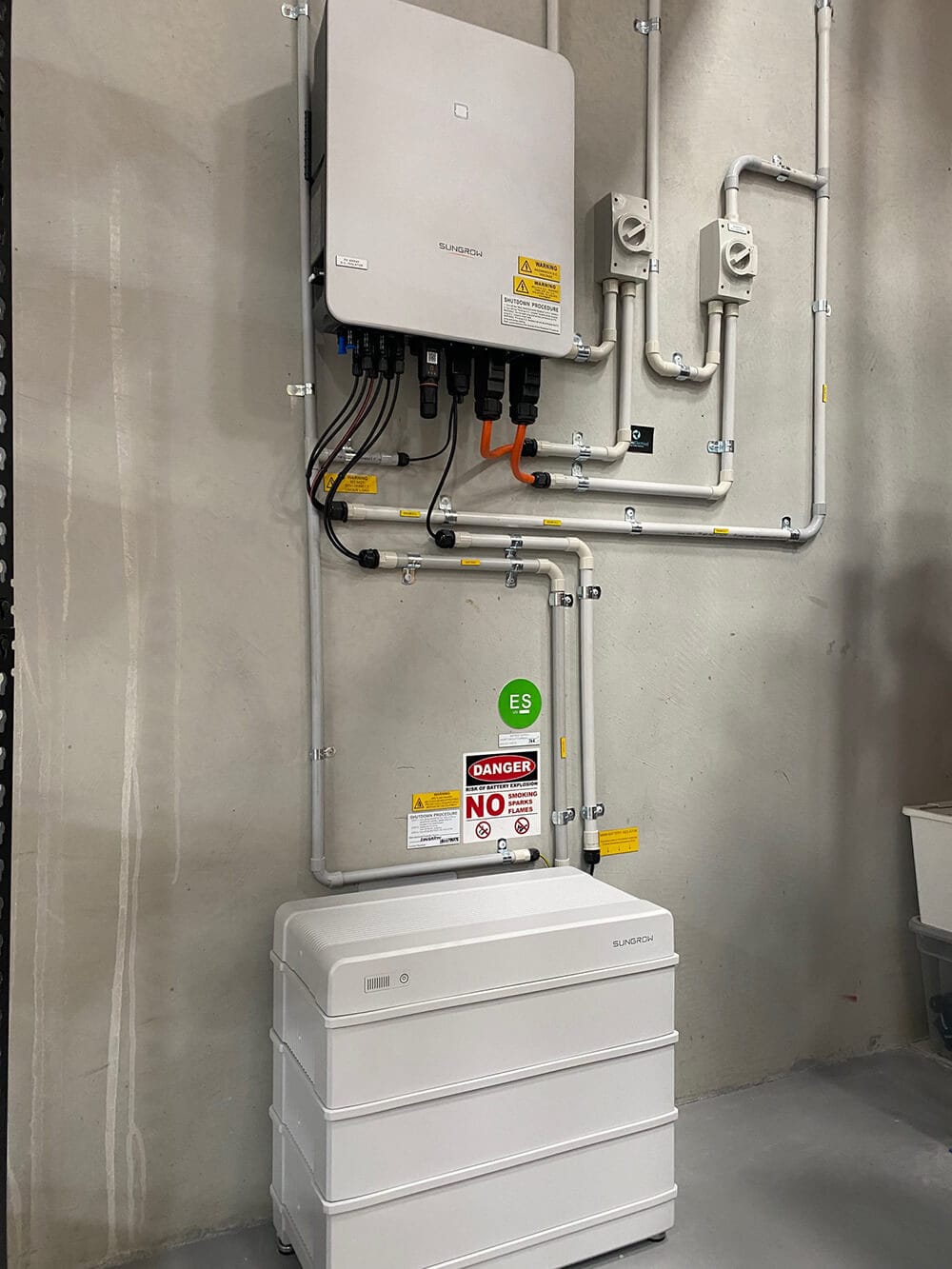
Sungrow’s SBR battery stacks in 3.2 kWh LFP modules, two to eight per stack (6.4 to 25.6 kWh). Our shop kit, the SBR160, is five modules and 16 kWh usable. Sungrow’s Australian warranty is 10 years, with at least 70% of the battery’s capacity at 10 years, and it expects the battery to be monitored online. Our HelcroLabz videos include a Sungrow SH10RT inverter with an SBR064 battery. The Sungrow 16 kWh kit is in our shop.
Enphase IQ Battery 5P
The IQ Battery 5P is an AC-coupled 5 kWh LFP battery, and Enphase says you can add more batteries as your energy needs grow. It suits homes that already have Enphase microinverters. Backup needs Enphase’s IQ System Controller 3 INT. Enphase’s Australian warranty is 15 years or 6,000 cycles, whichever comes first, with at least 70% of the battery’s rated capacity at 10 years and 60% at 15 years. Details are on our Enphase IQ Battery 5P page.
What a home battery costs, and the federal discount
An 8 kWh SiGENERGY SigenStor from us starts from about $8,400 on a single-phase home and about $10,900 on a three-phase home, supplied and installed, including GST, with the federal discount already taken off (October 2026). The full SigenStor price guide is on our solar battery page.
Shop prices for the other brands are for the equipment only: the Sonnen Batterie Evo kit is listed at $9,680, the Sungrow 16 kWh kit at $11,500 and the Enphase IQ Battery 5P at $5,557; installation is quoted separately. Every written quote follows a $50 site assessment (including GST).
The federal Cheaper Home Batteries Program has supported batteries installed from 1 July 2025 (Clean Energy Regulator). It works through small-scale technology certificates (STCs) and is usually taken off the price by your installer when you buy.
To qualify, the battery must be on the Clean Energy Council’s approved list, be installed with new or existing solar panels, be able to join a virtual power plant (VPP) if it is grid-connected (joining one is optional), and be installed by an SAA-accredited installer with a battery endorsement. Eligibility depends on the exact model and set-up; we check it before we quote.
As at October 2026 it is worth about $250 to $270 per usable kWh on the first 14 kWh (at a certificate price of $39.65 on 27 October 2026, Demand Manager), and less per kWh above that. It steps down on 1 January 2027 and again on 1 July 2027, and your rate is set by the date your Certificate of Electrical Safety is issued. There is no separate Victorian battery rebate. The full rules are in our battery rebate guide.
Is a battery worth it? It depends on how much power you buy in the evening and overnight, because that is what a battery replaces. If you have signed up to the Victorian Midday Power Saver, it gives up to 24 kWh a day of no-cost electricity between 11am and 2pm; read our Midday Power Saver guide before you size a battery around it.
Want a written quote for the battery that fits your home? Get a Quote or call 1300 201 358. We install across Melbourne’s South East. We respond within 2 business hours.
Why the installer matters as much as the battery
The maker’s warranty covers the battery. The installation is ours: Helcro Electrical gives a 10-year workmanship warranty on solar and battery installations, and it carries over to a new owner if you sell, as long as you tell us in writing and give us the new owner’s contact details. Our own team does the work, with no subcontracting.
We are a NETCC Approved Seller for solar and batteries, an authorised retailer on Solar Victoria’s list for solar, batteries and hot water, and a registered electrical contractor (REC 35448). Before you sign with anyone, ask for a written quote that names the exact battery, inverter and backup hardware, and check that the set-up is eligible for the discount.
Home battery questions
How long does a home battery last? Go by the warranty. SiGENERGY, Tesla, Sonnen and Sungrow give 10 years and Enphase 15 years, and some also cap it by use: Sonnen at 10,000 cycles, Enphase at 6,000 cycles and SiGENERGY at a set amount of energy through the battery. SiGENERGY, Tesla, Sungrow and Enphase guarantee at least 70% of the battery’s capacity at 10 years, and Sonnen guarantees at least 80% of its nominal capacity for its warranty period.
What size battery do most homes get? Size it to the power you use in the evening and overnight, not to the size of your solar. In the discount’s first two months (July and August 2025), the Clean Energy Regulator found the average battery was 15 kWh, and 54% were between 10 and 20 kWh. We work out your size from your bills at the site assessment.
Can I add more storage later, and does it get the discount? You can add storage later: the SigenStor, Sungrow, Powerwall 3 and Enphase all expand. The discount is different. The Clean Energy Regulator allows one battery claim per premises, so added capacity gets it only if your existing battery has never claimed it (for example, one installed before 1 July 2025).
The added capacity must be at least 5 kWh nominal, and the whole system can be no more than 100 kWh; the full top-up rules are in our battery rebate guide.
If you expect to need more storage soon, tell us at the site assessment so the first system is sized for it.
Will a battery keep my power on in a blackout? Only if it is set up for backup. Most batteries need extra backup hardware (see “Backup during a blackout” above); the Sonnen Batterie Evo has it built in. Tell us you want backup when you ask for a quote, and our electricians look at your set-up and recommend what it needs.
How we checked this page
Battery figures come from each maker’s own Australian documents and pages. SiGENERGY: SigenStor page and the AU & NZ SigenStor warranty. Tesla: Powerwall 3 AU datasheet and AU/NZ warranty. Sonnen: Sonnen Batterie Evo page, AU datasheet and AU warranty. Sungrow: SBR page and AU battery warranty. Enphase: home batteries page and AU/NZ warranty.
The discount rules come from the Clean Energy Regulator and the Department of Climate Change, Energy, the Environment and Water; the certificate price from Demand Manager; the battery sizes from the Clean Energy Regulator’s Quarterly Carbon Market Report (June quarter 2025); and the survey is SolarQuotes’ 2026 Installer’s Choice. Checked on 1 November 2026.
Get a home battery quote in Melbourne’s South East
We install home batteries across Melbourne’s South East. Tell us about your power bills, your solar and whether you want blackout backup, and we will recommend a battery that fits. Get a Quote or call 1300 201 358. We respond within 2 business hours. Written quotes follow a $50 site assessment (including GST), and we check that your set-up is eligible for the discount before we quote.