Last updated: 6 November 2026
What size solar battery do you need? Enough to cover what your home uses from 4 pm until your solar covers the house again next morning, plus about 10% for losses. Then check how much of it your panels can fill on a winter day. An 8 kWh SigenStor is the usual starting point for a home in Melbourne’s South East. That’s where the conversation starts at Helcro Electrical, a SiGENERGY Certified Installer based in Cheltenham. It isn’t what most people buy nationally, and it may not suit your house.
Our worked examples further down land at 8 kWh for a couple, 13 kWh for a family of four and 24 kWh for an all-electric home.
Already have solar? The method still works, but the prices in our table further down don’t: on solar you already have, we price it after the site assessment. Get a Quote or call 1300 201 358.
Key takeaways
- Size to your use from 4 pm until your solar picks up again, not to your daily total.
- Solar in Melbourne’s South East can make about twice as much in December as July, so test any size against a winter day.
- Since 1 May 2026 each extra usable kWh earns less: about $271 up to 14 kWh, $162 to 28 and $41 to 50, before fees, at $39.80 per certificate.
- The factor falls from 6.8 to 5.7 on 1 January 2027, and your Certificate of Electrical Safety date sets the rate.
- The federal discount is paid once per premises, so storage added after your battery has had the discount gets none.
On this page
- How to size a solar battery from your own use
- Can your solar fill it? Winter in Melbourne’s South East
- What a bigger battery adds, and what it costs after the discount
- Worked examples with SigenStor prices
- Power (kW) is a separate number from size (kWh)
- Single-phase or three-phase: does it change the size?
- How long does a solar battery last?
- If a heat pump, EV or gas switch is coming
- Why “start small and add later” can cost you
- When a smaller battery is enough, and when bigger earns its place
- Solar battery size questions
- How we checked this page
- Get a Quote for a solar battery in Melbourne’s South East
How to size a solar battery from your own use
You don’t need a solar battery size calculator, and we don’t run one: the sum is the same for any house.
- Find your daily use. Your bill gives a daily average. No bill handy? Use the yardstick table below.
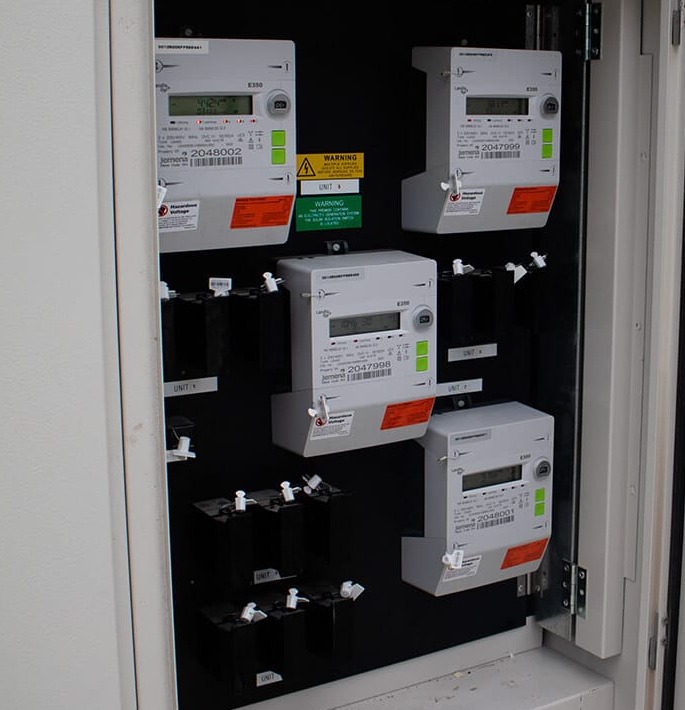
- Find your use in the window. A time-of-use bill can show your peak use, but not the whole window. “Your Smart Meter records your electricity usage every half hour”, Solar Victoria says, and your distributor’s online portal shows it. Add up a winter week and a summer week, from 4 pm to the next morning.
- If you have solar, look twice. Your smart meter tracks what you buy from and send to the grid, so your portal won’t show the solar you use directly. Your inverter app or a monitoring device fills that gap.
- Allow for losses. energy.gov.au says charging and discharging typically loses “about 10% of the stored energy”. Divide by 0.9: 9 kWh of use needs 10 kWh of storage.
- Compare usable capacity. Usable is what you can draw; nominal is the bigger spec-sheet figure. SigenStor’s 16 is 15.6 kWh usable. A Powerwall 3 is 13.5 kWh usable.
How much battery storage do I need: day, night or peak?
Size to the evening and overnight window, with peak hours as the floor. If you use 30 kWh a day, that alone doesn’t tell you whether you need 35, 20 or 10: part of it happens while your panels are running.
Peak hours matter because of the time-of-use tariff. On United Energy’s default offer, power costs $0.4032 per kWh from 4 pm to 9 pm and $0.2214 from 9 pm to 11 am, including GST, with prices set to 30 June 2027. Most customers are on market offers, and the Essential Services Commission (ESC) says this default generally applies only to customers previously on a time of use tariff, so check your own plan.
No data yet? A rough yardstick
| Household | Summer, kWh a day | Winter, kWh a day |
|---|---|---|
| 1 person | 7.5 | 10.1 |
| 2 people | 12.4 | 16.2 |
| 3 people | 12.7 | 17.5 |
| 4 people | 14.7 | 19.8 |
| 5 or more | 18.7 | 24.4 |
Whole-day figures, not battery sizes: our daily sums from the Australian Energy Regulator’s (AER) 2020 benchmarks for Victoria’s Climate Zone 6, the latest we could find. They use 2019 grid data, so they miss solar a home uses itself. To get from a whole day to your window you need your half-hour data; until then, start from the closest worked example below.
Can your solar fill it? Winter in Melbourne’s South East
Solar Victoria says the size “will mostly depend on the size of your solar electricity system, how much energy you typically consume overnight and whether you want backup during a power outage”. So there’s no fixed ratio of battery to panels: all three decide it.
Winter is the test. Solar Victoria says “it’s common for solar systems in Victoria to generate more than twice as much in December as July”. Public solar models (PVWatts and PVGIS) put an unshaded, north-facing Melbourne roof at roughly 2.1 to 2.7 kWh a day per kW of panels in July and 4.6 to 5.3 in December:
| Solar system | July, kWh a day | December, kWh a day |
|---|---|---|
| 5 kW | 10.5 to 13.5 | 23 to 26.5 |
| 6.6 kW | 14 to 18 | 30 to 35 |
| 10 kW | 21 to 27 | 46 to 53 |
| 13 kW | 27 to 35 | 60 to 69 |
Our sums, before the house uses any.
Your house takes its share first, and the battery gets what’s left. That’s why a battery sized in summer can disappoint: December can overfill a battery that July can’t fill.
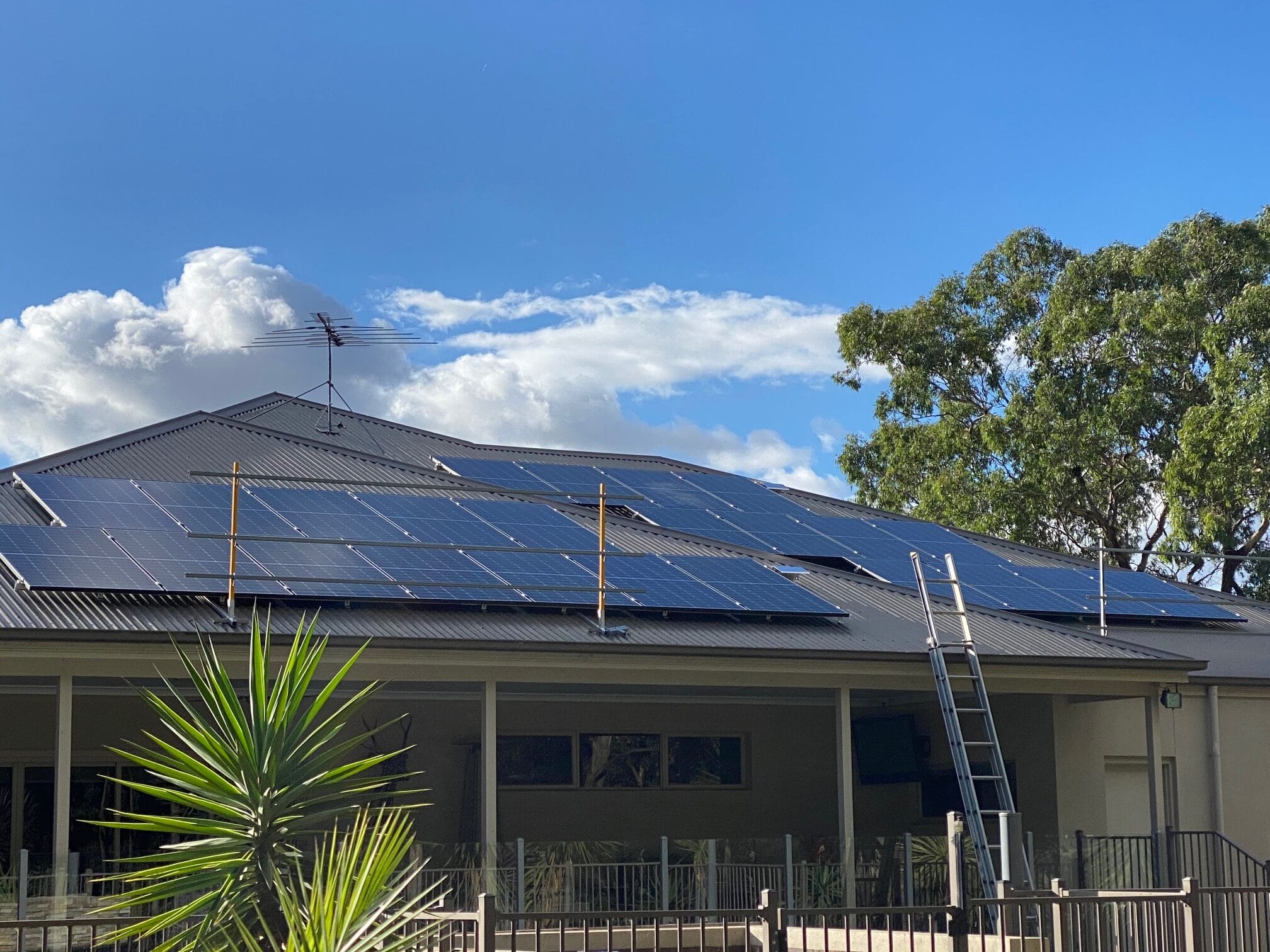
Old system or a small roof? Those panels are a fixed limit. We can add a battery to solar another company installed, keeping the existing inverter or replacing it, depending on the situation. Planning a solar panel installation and a battery together? Size the battery to your use, then the solar to fill it in winter.
What the free midday window changes
Since 1 October 2026, Victorian households with a smart meter can ask for the Midday Power Saver: $0 usage from 11 am to 2 pm, up to 24 kWh a day, shared with everything on general supply. A battery can top up on a dull day, but the ESC told the Minister that battery owners’ “incremental bill saving in moving onto the Midday Power Saver may not be significant”. The ESC also sets prices from 1 July 2027, so don’t build a size on a window that may be repriced.
What a bigger battery adds, and what it costs after the discount
The federal discount (most people call it the rebate) comes from the Cheaper Home Batteries Program, paid as small-scale technology certificates (STCs). Under the Clean Energy Regulator’s rules, since 1 May 2026 the factor applies in full to the first 14 kWh of usable capacity, at 60% from 14 to 28 kWh and at 15% from 28 to 50 kWh, with the total rounded down to whole certificates.
| Usable capacity | Share of factor | Each extra kWh at 6.8 |
|---|---|---|
| First 14 kWh | 100% | about $271 |
| Over 14 to 28 kWh | 60% | about $162 |
| Over 28 to 50 kWh | 15% | about $41 |
| SigenStor size (usable kWh) | Discount at 6.8 | Discount at 5.7 |
|---|---|---|
| 8 (7.8) | $2,109 | $1,751 |
| 13 (13) | $3,502 | $2,945 |
| 16 (15.6) | $4,020 | $3,383 |
| 24 (23.4) | $5,293 | $4,418 |
| 48 (46.8) | $6,806 | $5,691 |
Both tables are our sums, before fees, at $39.80 per certificate, Demand Manager’s last price on 6 November 2026. The first 14 kWh earns about $271 before fees, and we allow $250 to $270 after them. No regulator publishes fees, so compare the dollar discount on each quote.
Should you oversize while the rebate’s here? The taper isn’t a cap. Going past 14 kWh can still be right if your use and solar support it, but past 28 kWh you pay close to full price for each extra kWh. Of the sizes we supply, 13 kWh is the largest wholly inside the first band. So the solar battery cost per kWh depends on which kWh you mean, and the examples below show both.
Does it end or just drop? It drops: 6.8 for batteries certified by 31 December 2026, 5.7 from 1 January 2027, then further steps down to the end of 2030. Each step applies to every band, and every size loses about 16% to 17% in January (a 13 kWh SigenStor’s discount falls from $3,502 to $2,945, before fees).
The date on your Certificate of Electrical Safety sets the rate. Not the deposit, not the delivery, not the site visit, so a December install certified in January gets 5.7.
The full rules, and what Victoria adds on top, are in our battery rebate guide.
Worked examples with SigenStor prices
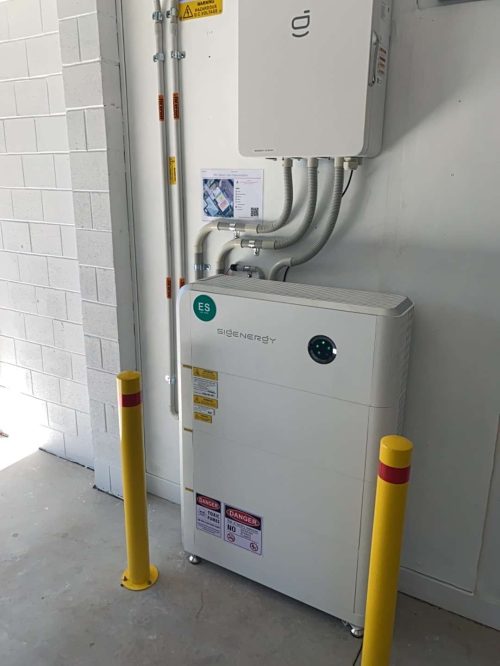
We supply the SiGENERGY SigenStor in 5 kWh and 8 kWh modules, up to six per controller, and the 13 is one of each. The sizes on our list are 5, 8, 10, 13, 16, 24, 32, 40 and 48 kWh.
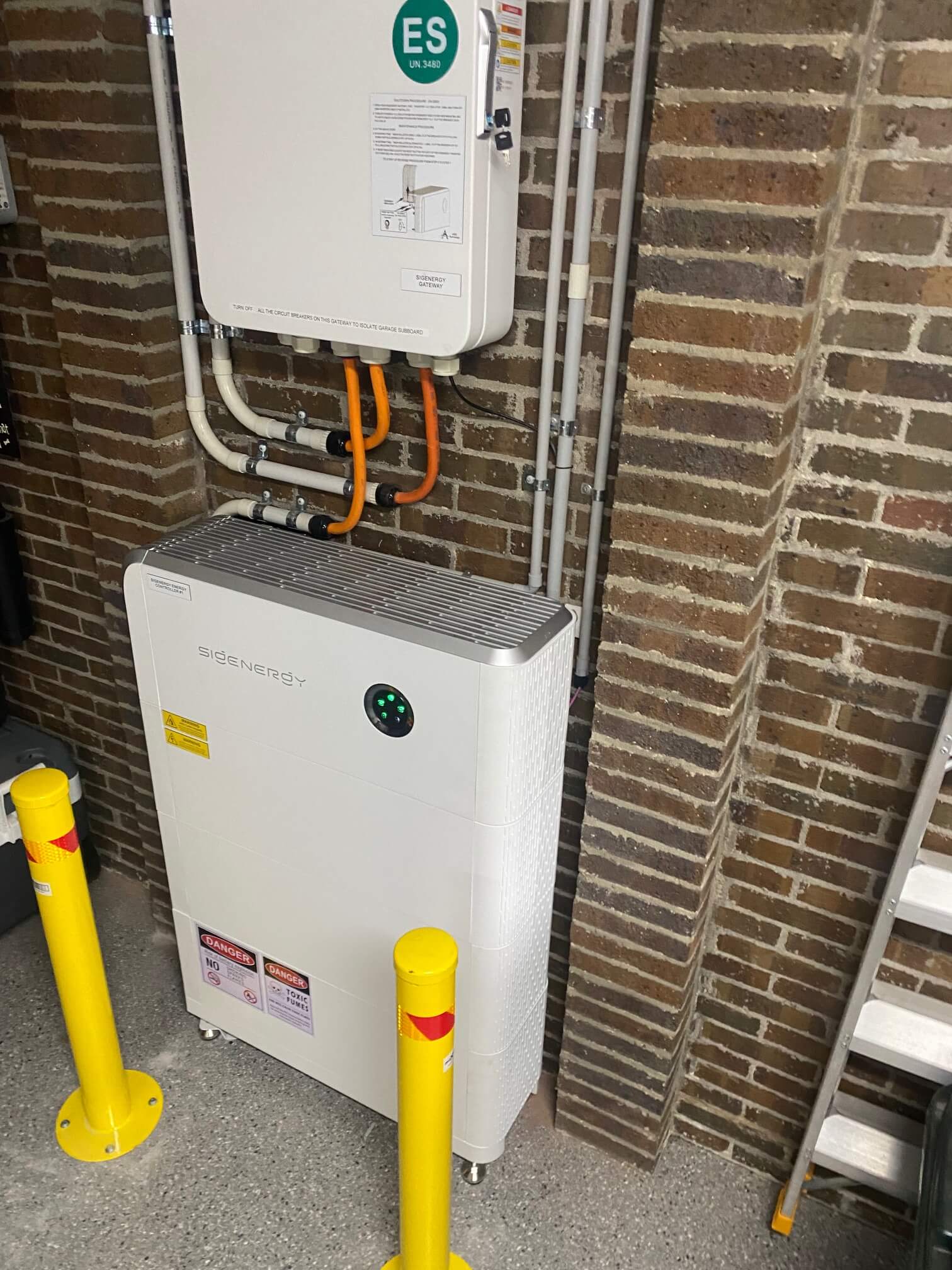
Each module is 767 mm wide, 270 mm high and 260 mm deep. Listing depends on the exact inverter and battery combination, so we confirm your model before quoting.
Three homes, with example figures you’d swap for your own:
| Home | Use, 4 pm to morning | After 10% losses | Size | Single-phase from | Three-phase from |
|---|---|---|---|---|---|
| Couple, gas heating | 6 kWh | 6.7 kWh | 8 kWh | $8,400 | $10,900 |
| Family of four, gas heating | 11 kWh | 12.2 kWh | 13 kWh | $11,600 | $14,100 |
| All-electric, heat pump heating | 20 kWh | 22.2 kWh | 24 kWh | $16,400 | $18,900 |
Approximate prices, supplied and installed, including GST, after the federal discount, as at October 2026. The full SigenStor price guide runs from $7,600 (5 kWh 1-ph) to $30,900 (48 kWh 3-ph), with 10 kWh from $10,800 single-phase. These are starting prices, and a larger SigenStor controller costs more. They’re based on the discount rate until 31 December 2026. On solar you already have, we price it after the site assessment.
Now test them in July. On 6.6 kW, the family’s 13 kWh has 14 to 18 kWh a day to draw on before the house uses any, so it will often fall short. The all-electric home’s 24 kWh on 10 kW has 21 to 27, so it won’t fill from solar on most July days.
That doesn’t rule either size out. It means some winter evenings come from the grid, so ask whether the rest of the year uses the extra. If it wouldn’t, go down a size or add panels.
The average price per usable kWh mostly falls as size rises: about $1,077 at 8 kWh, $795 at 16 and $632 at 48, single-phase. But the extra kWh don’t all cost the same: 10 to 16 kWh adds $1,600 for 5.2 usable kWh, and 16 to 24 adds $4,000 for 7.8.
Not sure your solar can fill it in July? Tell us your suburb, your phase if you know it and what solar you have. Written quotes follow a $50 site assessment. Get a Quote or call 1300 201 358. We respond within 2 business hours.
Power (kW) is a separate number from size (kWh)
kWh is how much the battery holds; kW is how fast it delivers it. People often say “10 kW battery” when they mean 10 kWh. Rated power limits how many appliances it can run at once without the grid.
So is your inverter big enough? On the grid, anything over its limit comes from the grid. In a blackout, it’s a hard limit. SiGENERGY makes SigenStor controllers from 3 to 12 kW on single phase and 5 to 30 kW on three phase, so add up what you’d run at once. Modules cap power too: SiGENERGY’s datasheet rates a BAT 8.0 at 4 kW, so one 8 kWh module gives up to 4 kW from the battery, whatever the controller.
How much battery for a blackout? Solar Victoria warns “Standard solar battery systems also do not provide backup power when the grid fails”, though some can with a battery designed for it. Backup can cover the whole property or only selected circuits. Pick what must keep running, add up its load, then divide the kWh by it.
SigenStor backup needs the Sigen Energy Gateway. With one, you can set a Backup Reserve in the mySigen app. On grid, the battery stops discharging at that level, which leaves less for everyday use, so add the reserve to your evening number. On existing solar, a third-party inverter on the Gateway’s Grid Port will shut down in an outage.
Single-phase or three-phase: does it change the size?
Phase doesn’t change how much you use. It changes price and options. Three-phase SigenStor starts at 8 kWh and costs $2,500 more than single-phase up to 32 kWh, then $1,300 more at 40 and 48. We look at your switchboard and supply phase at the site assessment.
How long does a solar battery last?
“Last” means three things: until peak ends at 9 pm, through to morning, and the years before it wears out.
On one charge
It’s division with the load stated. A 10 kWh battery running a steady 1 kW lasts about 10 hours before losses. Add a 2 kW portable heater and that falls to about 3.3 hours, and one induction zone alone can draw 1.6 to 3 kW. Whether it gets you through the night depends on what you run.
In years
Go by the warranty: it’s the firmest guide available, not a replacement date. SiGENERGY warrants 70% of a module’s usable energy for 10 years or until its throughput limit (29.64 MWh for a BAT 8.0, roughly 3,800 full cycles by our sums), whichever comes first. Cover drops to 5 years if the system is offline for over a year. SiGENERGY’s warranty sets limits of -20 to 55 °C, recommends 10 to 30 °C and says service life is related to working temperature, so where it’s mounted matters.
Other makers’ terms differ: our solar battery comparison sets Tesla, Sonnen, Sungrow and Enphase side by side.
Leave margin for wear. A warranty can allow 70% at year 10, so an 8 kWh SigenStor (7.8 kWh usable) may be nearer 5.5 kWh by then. Solar Victoria adds that “it is wise not to overuse a battery, for example by fully charging and discharging two or three times a day. Doing this might shorten its lifespan.”
If a heat pump, EV or gas switch is coming
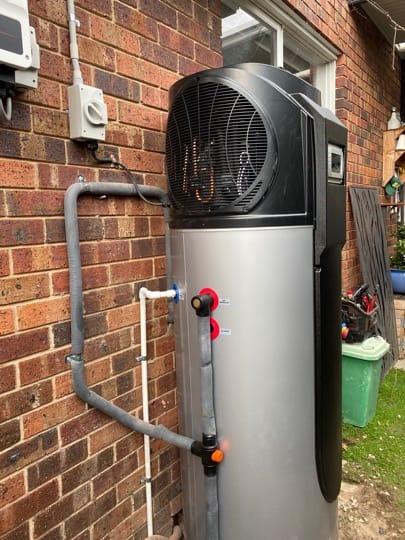
Solar Victoria names “switching from gas hot water to electric heat pump” as a change to plan for. Timing matters more than size here, so work out the order of your home electrification before you use your one discount.
- Heat pump hot water: Solar Victoria says one timed for the middle of the day “could be fully powered by rooftop solar panels for much or all of the year, depending on other household energy usage and the size of the rooftop solar system”, so it may not need the battery at all.
- EV: as a worked example, 12,000 km a year at 15 kWh per 100 km is about 4.9 kWh a day. Plugged in at night, it can drain the battery. Where the charger and your system allow it, we set the home EV charger up so it doesn’t charge the car from your home battery. So if your charger is set up that way, leave the car out of your window sum.
- Heat pump heating: the swing factor. The Gas-Electricity Meter Data Linking Project Report (January 2025, for the federal energy department) found electric-heated homes without solar draw more from the grid in winter “during the early morning and evening hours to meet heating demand”. Panels make little then, and if you’re still on gas your data won’t show it yet.
Why “start small and add later” can cost you
The federal discount is paid once per premises, so storage added after your battery has had the discount gets none. The regulator’s words: “You can’t claim STCs for future additional solar batteries at the same premises if you decide to upgrade to a larger system later.” A new owner inherits that limit.
If your battery has never claimed, expansion can earn it, on the new modules only: our battery rebate guide has the conditions. If you expect to need more storage soon, tell us at the site assessment so the first system is sized for it.
When a smaller battery is enough, and when bigger earns its place
Smaller is enough when:
- your evening and overnight use is low (5 kWh is the smallest size the discount covers)
- your solar is small, with little to spare in winter
- you’re on a flat rate with little peak gap
- you’re home all day and use your solar directly
Bigger earns its place when the window really is big and the panels can fill it: all-electric heating, heavy evening use, or backup with a reserve. Solar Victoria’s test: “To save the most on electricity bills it is generally best to buy a battery that you will regularly charge and discharge to the recommended level.”
That answers “is 30 kWh overkill?” It’s oversized if it rarely empties or rarely fills.
What do people buy? Since 1 May, 56.6% of approved installations (an Excel download) have been over 14 kWh and up to 28 kWh of usable capacity, up from 35.6% before the change (Clean Energy Regulator, national, data to 30 September 2026). Only 15.3% were 14 kWh or under, so an 8 or 13 kWh system is smaller than most people choose.
The regulator also reports average capacity fell from 36 kWh in April to around 23 kWh in May and June. That’s what people bought, not what you need.
Check any quote. Ask the installer to show the workings against your own use. We work it out from your bills and usage at the site assessment.
What our customers say
…he provided several options for the upgrade we wanted and picked up a potential problem with one of the existing inverters handling the amps needed for the back-up battery…
Renate El-Shataly, Google review
Solar battery size questions
How many solar batteries do I need?
Usually one system. A SigenStor is one battery built from modules, so the question is total kWh, not the number of boxes.
What size battery for a 6.6 kW solar system?
Your evening and overnight use sets it. A 6.6 kW system makes about 14 to 18 kWh a day in July on public solar models before the house uses any, and a 6 kW or 5 kW system less. So a 13 kWh battery will often fall short in July, and anything bigger more so.
What size battery for a 10 kW solar system?
Use sets it here too. A 10 kW system makes about 21 to 27 kWh a day in July and 13 kW about 27 to 35, so these can fill a bigger battery in winter if your use justifies one.
Is a 20 kW battery enough to run a house?
A 20 kW rating tells you how much it can run at once, not for how long. If you mean 20 kWh, that’s about 20 hours at a steady 1 kW before losses, against about 10 hours for a 10 kWh battery.
Is it better to have more solar panels or a bigger battery?
Check July first. If your battery wouldn’t fill on an average July day, more panels come first, roof permitting. If you still export in winter and buy power every evening, more battery can make sense.
How do I know when my solar battery needs replacing?
Go by the warranty terms. The 70% is measured under the maker’s own test, and we found no maker’s document saying an app reading tells you when to replace it. If it seems to hold much less than it did, ask your installer to check it.
How we checked this page
On 6 November 2026 we read the Clean Energy Regulator’s Solar batteries page (updated 29 October 2026) and its data to 30 September 2026, the Regulations, the ESC, Solar Victoria and SiGENERGY’s warranty. The federal department, energy.gov.au and AER pages came from archive copies. We found no change to the tiers or factors.
Get a Quote for a solar battery in Melbourne’s South East
Helcro Electrical is a SiGENERGY Certified Installer, Tesla Powerwall Certified Installer and Sonnen Certified Partner, based in Cheltenham, with our own team and no subcontractors. We’re a Registered Electrical Contractor (REC 35448) and a NETCC Approved Seller for solar and batteries. Every battery installation carries our own 10-year workmanship warranty.
Tell us your suburb, your phase if you know it, what solar you have and your evening use if you’ve found it. Written quotes follow a $50 site assessment, where we work out the size from your bills and usage. You’re under no obligation. Get a Quote or call 1300 201 358. We respond within 2 business hours.