Last updated: 6 November 2026
Victoria’s minimum rental standards gain a set of energy standards from 1 March 2027. For rental providers (landlords), cooling is the one that can mean a new air conditioner with nothing broken: a rental with no fixed cooler needs an energy-efficient fixed cooler in the main living area when a new rental agreement starts or an existing agreement converts to month-to-month, unless an exemption applies.
So not every rental needs an air conditioner on 1 March 2027. But if your rental has no fixed cooling, a fixed term ending after that date can, as we read it, set the rule off with nobody signing anything. A safety check won’t meet it.
This guide for rental providers and property managers ends with a printable checklist. Helcro Electrical, a registered electrical contractor (REC 35448), does the electrical work and installs split systems in Melbourne’s South East, so we also say which jobs aren’t ours. It’s general information, not legal advice.
Key takeaways
- A rental with no fixed cooler needs an efficient one at a new agreement or a conversion to month-to-month from 1 March 2027, unless an exemption applies.
- Heating, hot water and an existing fixed cooler are triggered when the system fails and can’t be repaired.
- From 1 July 2030, the cooling standard applies whatever the agreement’s start date or status.
- A passed safety check doesn’t show the cooling standard is met.
- Arrange any Victorian Energy Upgrades (VEU) discount before you buy.
- Jump to the printable checklist for each rental.
On this page
- The minimum rental standards in Victoria, and what 1 March 2027 adds
- Rental electrical safety check vs the energy standards
- Does your rental need a cooler, and when?
- What counts as an efficient fixed cooler
- If something’s already there, or breaks
- The switchboard and power for the cooler
- Exemptions: apartments, owners corporations and heritage
- Who does which job
- Discounts: arrange them before you buy
- The order to do it, working back from the lease end
- Records to keep, and a note for property managers
- Printable checklist: minimum rental standards 2027
- Minimum rental standards questions
- How we checked this page
- Get a Quote for a rental in Melbourne’s South East
The minimum rental standards in Victoria, and what 1 March 2027 adds
Consumer Affairs Victoria lists 15 categories of minimum standards for rental properties: bathrooms, electrical safety, heating, kitchen, laundry, lighting, locks, mould and damp, structural soundness, toilets, ventilation, vermin proof bins, windows, window coverings and window covering anchors. Those are the standards in force in 2026, and its checklist covers the detail, so we don’t repeat it here. The other new rental laws are on its new changes page.
This guide covers the energy layer in the Residential Tenancies Regulations 2021. Five standards start on 1 March 2027, and draughtproofing starts on 1 July 2027.
| Standard | Starts | When it applies | What’s needed |
|---|---|---|---|
| Cooling | 1 March 2027 | New or converted agreement, or an existing fixed cooler fails and can’t be repaired; from 1 July 2030, whatever the agreement’s start date or status | In the main living area: 3 star or above for the climate area if non-ducted, TCSPF 3.8 or above if ducted |
| Heating | 1 March 2027 | Existing system fails and can’t be repaired | Electric, in the main living area: 2 star or above for the climate area, or HSPF 3.2 or above if ducted |
| Hot water | 1 March 2027 | Existing system fails and can’t be repaired | Heat pump or electric-boosted solar |
| Ceiling insulation | 1 March 2027 | New or converted agreement | R5.0 where a ceiling space, or part of one, has none |
| Shower heads | 1 March 2027 | New or converted agreement | 4-star head in every shower; 3-star if the plumbing means a 4-star can’t be fitted or won’t work properly |
| Draughtproofing | 1 July 2027 | New or converted agreement | Seals on external doors and windows; unsealed wall vents sealed or closed |
“Converted” means a fixed term that has rolled over to month-to-month (periodic). Exemptions apply. Checked 5 November 2026.
Rental electrical safety check vs the energy standards
Three different things get called a check.
- The 2-yearly safety check. From 13 October 2026, 2-yearly electrical safety checks apply to all Victorian rental properties, and gas safety checks apply too where the property has gas appliances, fixtures or fittings. The electrical check follows section 4 of AS/NZS 3019.
- A minimum standards “check”. Victorian law doesn’t set out a formal “minimum standards inspection” each time a property is re-let. It does require the standards to be met when the property is advertised and before the renter moves in. Consumer Affairs Victoria’s checklist is a helpful guide, not a legal form.
- The energy standards. A passed safety check doesn’t show the property meets the cooling standard. That’s a separate requirement.
Consumer Affairs Victoria also says rental providers and their agents must arrange annual smoke alarm safety checks for all rental agreements.
Unsure about a repair someone has recommended? Read the record. The regulations say it must give the name and licence or registration number of who did the check, the date, and the results, including any repairs required.
Separately from the 2-yearly check, a rental minimum standard has required since 29 March 2023 that all power outlets and lighting circuits connect to a switchboard circuit breaker and a safety switch (RCD). We do rental electrical safety checks for $300 including GST; the detail is on our rental safety checks section. A check from us covers the electrical side. It doesn’t certify that a rental meets every minimum standard.
Does your rental need a cooler, and when?
If it has no fixed cooler, yes, at the first trigger on or after 1 March 2027. The regulation covers agreements “entered into or created on or after 1 March 2027”, and Consumer Affairs Victoria’s guide says the standards apply to each property “when the relevant trigger happens”.
Does a lease rolling to month-to-month count?
Yes, as we read it. When a fixed-term rental in Victoria ends and the renter stays on, it automatically becomes a periodic agreement: monthly, or a shorter period if rent was due more often than monthly. Since 25 November 2025, a rental provider can’t end it at the end of the term without a valid reason. So a fixed term ending after 1 March 2027 can set the rule off with nobody signing anything.
Does a renewal count?
Our reading is yes. Consumer Affairs Victoria doesn’t use the word “renewal”, but it calls signing on again a “new fixed-term agreement”, so a new fixed term with your current renter counts.
Which of my properties trigger first?
Our reading of the regulations and the Residential Tenancies Act together, for a rental with no fixed cooler and no exemption:
| Your rental | When the cooling standard applies |
|---|---|
| New agreement with a new renter from 1 March 2027 | At that agreement, with the cooler in by move-in day |
| Fixed term ends in July 2027, renter stays on | Triggered in July 2027, when it rolls over; nothing is due on 1 March itself |
| Fixed term ends in July 2027, same renter signs again | Triggered in July 2027, by the new fixed term |
| Month-to-month since before 1 March 2027 | At a new rental agreement, or by 1 July 2030 |
If a rental is already month-to-month before 1 March 2027, there’s no fixed term left to convert, which is why the last row reads that way. A renter leaving at the end of a term means the next agreement is the trigger. Neither the rules nor Consumer Affairs Victoria say how long you have after a rollover with a renter already in place, so our advice is to have the cooler in before the term ends.
From 1 July 2030, the cooling standard applies to Victorian rental properties whatever the agreement’s start date or status, so most will need fixed cooling in the main living area by then. Exemptions apply where installation is unreasonable, and community housing and specialised housing programs fall under separate standards. So waiting only works while a lease stays fixed or already month-to-month.
RMIT associate professor Trivess Moore told the Eastern Melburnian (16 July 2026) that landlords who delay could face supply shortages and longer waits for trades if many owners try to comply at once.
In Melbourne’s South East, with a fixed term ending after 1 March 2027 and no fixed cooler? Tell us the address and when the lease ends. Get a Quote or call 1300 201 358. We respond within 2 business hours. Written quotes follow a $50 site assessment (including GST).
What counts as an efficient fixed cooler
A non-ducted system must be a non-portable electric air conditioner or heat pump capable of cooling, with a 3 star or above GEMS (national energy rating) cooling rating for the climate area of the rental. A ducted system must have a Total Cooling Seasonal Performance Factor (TCSPF) of 3.8 or above.
The rule says “capable of cooling”, not reverse cycle, but a reverse-cycle split is often the simple answer. Consumer Affairs Victoria says one reverse-cycle air conditioner may satisfy both the heating and cooling standards. To do that, it would need a 2 star or above heating rating and a 3 star or above cooling rating for the climate area of the rental.
Which star rating and which zone? The Energy Rating label lists Melbourne in the cold zone, so for a rental in Melbourne’s South East, read the COLD row: one star rating for cooling and one for heating. The ratings are on the unit’s label or in its manual (our energy label guide explains what they cost you), and you can compare models in the Energy Rating Calculator, which takes your postcode.
How many units, and which room? The standard asks for a cooler “installed in, or that has an outlet in, the main living area”, and it doesn’t set a number of units or a capacity. One compliant unit there appears to be enough. It doesn’t require a second unit, and it says nothing about a renter asking for one.
Neither the regulations nor Consumer Affairs Victoria’s guides define “main living area” or say how it applies to open-plan homes. In an open-plan home, the shared living space is the sensible place for the unit, though that is our reading rather than a rule.
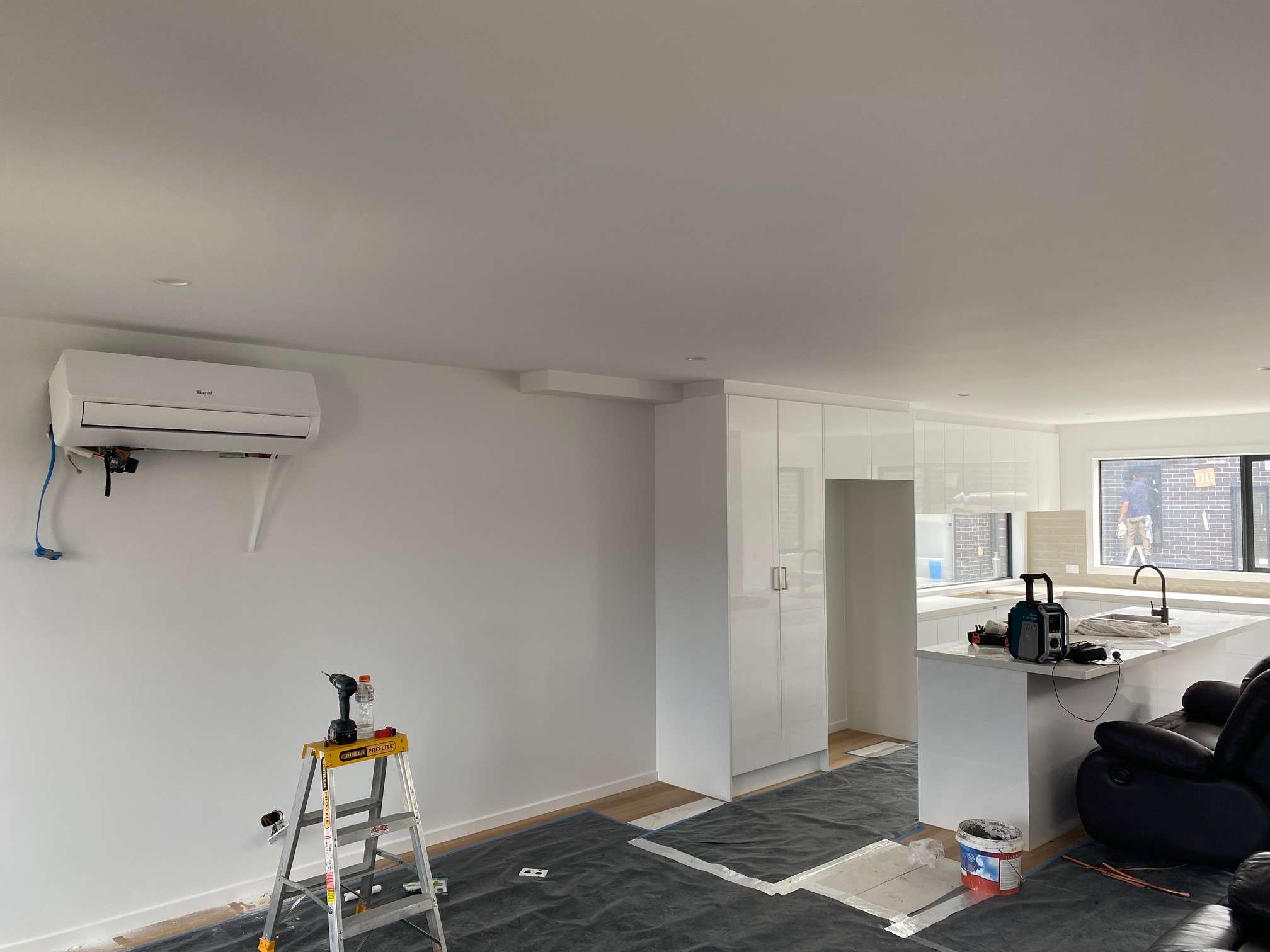
What doesn’t meet it? A portable air conditioner doesn’t, because the standard requires a fixed system. A fan isn’t an air conditioner or heat pump, so it doesn’t meet the energy efficient cooling standard. And a split in a bedroom alone doesn’t tick the main living area box.
If something’s already there, or breaks
Consumer Affairs Victoria says the heating and hot water standards are triggered when an existing system fails and cannot be repaired, and the same applies to a fixed cooler already in the home. The trigger is that failure, not the system’s age.
An existing cooler. A fixed cooler in good working order, installed and in place before 1 March 2027 and located in, or with an outlet in, the main living area, doesn’t have to be upgraded. That includes window units, room evaporative coolers, ducted evaporative systems, and reverse cycle air conditioners. Even a 1970s unit can stay on those terms. A failed ducted evaporative system may be replaced with another ducted evaporative system.
A gas heater. A gas space heater rated 2 stars or above can stay while it’s in good working order. One below 2 stars generally already falls short of the current standard and needs upgrading now. Ducted gas can stay until it fails beyond repair: it has no star test, but it needs an outlet in the main living area. After that, the gas ducted heating replacement must generally be electric.
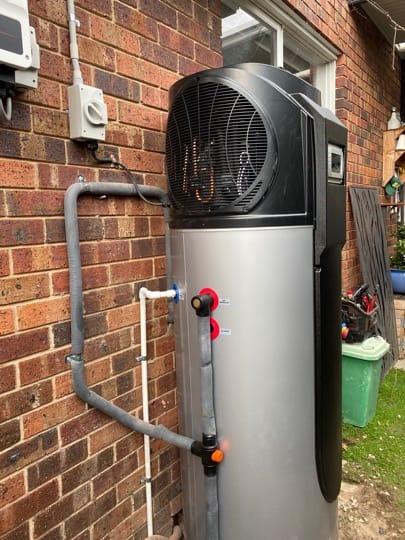
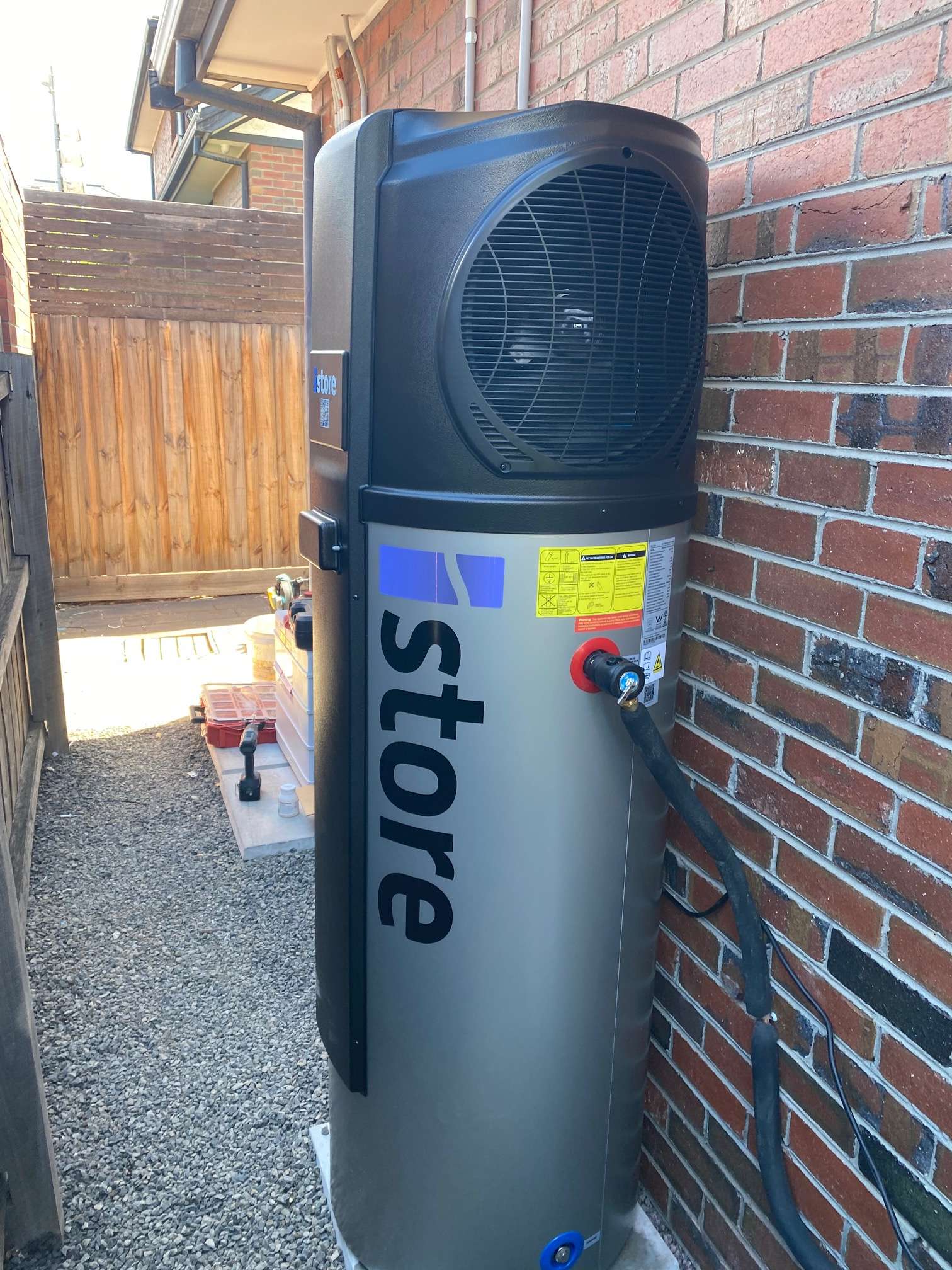
Hot water. A working system stays. From 1 March 2027, when a rental’s hot water system fails and can’t be repaired, it must generally be replaced with an efficient heat pump or electric-boosted solar water heater, and a failed gas system generally can’t go back to gas. Exemptions include centralised building systems and a like-for-like replacement under warranty. LPG systems may be replaced with LPG, and a temporary water heater is allowed for no more than 60 days.
Rental providers can get a VEU discount of up to $560 when replacing a gas hot water system with a heat pump. The figure is indicative, and a minimum $200 contribution applies. Solar Victoria’s hot water rebate requires the applicant to be an owner-occupier (a temporary exception for some regional towns doesn’t reach Melbourne’s South East). We install heat pump hot water and apply the VEU discount on our heat pump hot water installations.
What the rules don’t ask for.
- Insulation top-ups. Existing ceiling insulation of any R-value can stay. If part of the ceiling has none, that part needs R5.0 at the next new or month-to-month agreement, unless an exclusion applies.
- Solar panels. Nothing in the standards requires them.
- A gas check with no gas. Gas safety checks only apply where the home has gas appliances, fixtures or fittings.
Door snakes go the other way: they don’t count as draughtproofing, because Consumer Affairs Victoria says non-fixed products don’t meet the standard.
The switchboard and power for the cooler
The rental electrical safety standard covers power outlets and lighting circuits. Meeting it doesn’t by itself mean the switchboard is ready for a new air conditioner.
Many split system manuals, including Mitsubishi Electric’s and Haier’s, require a dedicated circuit, and Energy Safe Victoria says the manufacturer’s requirement must be followed. A new air conditioner adds load, and the electrician must work out the new maximum demand. Where the existing board can’t take the extra load, it may need upgrading, which the rental regulations themselves anticipate.
Is an old switchboard a way out? There’s no set dollar limit in the cost exemption: the test is whether installation would cost significantly more than the average for an equivalent house or apartment. An old switchboard won’t get you through that test for heating or cooling, because the upgrade isn’t counted. For hot water it counts, but the total must still be significantly above average.
A separate exemption applies if installation would need the electricity network augmented to provide more than a basic or standard connection. That’s different from upgrading the switchboard at the property.
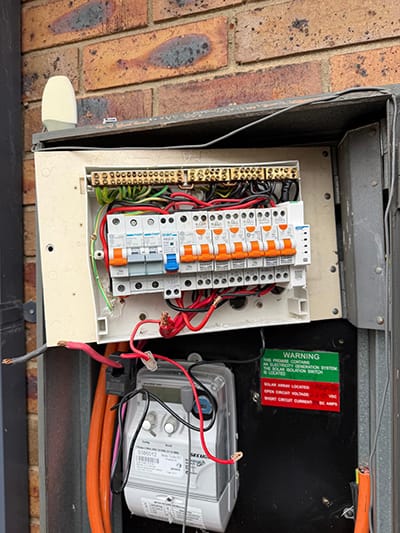
What it costs with us. A split system on a standard back-to-back install starts from $1,618 (Haier 2.5 kW, including GST), with no rebate involved, and a home switchboard upgrade is typically $1,250 to $2,500 including GST. On the national register at 4 November 2026, Haier’s 2.5 kW reverse-cycle wall splits rate at least 3 stars cooling and 2 stars heating in the cold zone that covers Melbourne’s South East. Our split system installation page has the full price table.
Need a split system in a rental in Melbourne’s South East? Tell us the address, and we’ll look at the new split and the switchboard together. We check your existing board during the $50 site assessment, at no extra charge. Get a Quote or call 1300 201 358.
Exemptions: apartments, owners corporations and heritage
Exempt doesn’t mean no cooler. If it’s unreasonable to install an energy efficient cooler, the property still needs a fixed cooler in good working order in, or with an outlet in, the main living area. From 1 July 2030, that fallback is required unless installing even that is unreasonable.
- Owners corporation. Its rules must actually prohibit the installation. Needing its approval isn’t, on the wording, the same thing.
- Heritage. The home must be on the Victorian Heritage Register and a permit to alter it must have been refused. A local council heritage overlay is a separate system, so don’t assume it qualifies on this ground. The regulations also list cases where complying with any other Act or local law makes the cost of installation prohibitive, which, as we read it, is the ground an overlay would have to meet. Get advice first.
- Centralised building system. Consumer Affairs Victoria gives this as an example for cooling, though it isn’t among the grounds listed in the regulations, which aren’t exhaustive.
- No room for a compressor. Consumer Affairs Victoria gives this as a heating example. It isn’t listed for cooling.
If you rely on an exemption, keep records showing it applies, such as the permit refusal, the owners corporation rule or the quotes.
Who does which job
| Job | Who does it |
|---|---|
| Safety check, new wiring, switchboard | Licensed or registered electrician for the check; licensed electrician for new wiring |
| Split system | Refrigerant handling licence from the Australian Refrigeration Council, licensed electrician for new wiring, and Victorian plumbing registration or a licence that covers split systems |
| Ceiling insulation | Active Certified Insulation Installer (CII) certification from the Energy Efficiency Council; rental providers can’t do it themselves |
| Gas check before draughtproofing | Licensed or registered gasfitter |
| Shower heads | No plumber needed: an unlicensed person may change over a water efficient shower head in a home, and from 1 March 2027 that means 4 stars or better |
| Door and window seals | No trade named, only that they follow the manufacturer’s instructions |
Helcro Electrical does the electrical rows and installs split systems and heat pump hot water. A licensed or registered gasfitter does the gas check, and a CII installer does the insulation.
Insulation comes with an electrical step. For rental agreements from 1 March 2027, the insulation must go in within 30 days after a licensed or registered electrician completes a pre-insulation electrical safety checklist, and any work it recommends must be done first. Power to consumer mains and solar cables not in conduit that the checklist specifies must be isolated by an electrician, and the rental provider must have them reconnected afterwards.
Consumer Affairs Victoria says the checklist is part of the installation service through VEU, but Energy Victoria says these assessments “may be at a customer’s own expense or included in the installation quote”, so ask how it’s priced before you sign.
Discounts: arrange them before you buy
Private rentals can get a Victorian Energy Upgrades discount. The work must go through an accredited provider, or an installer working with one, using an approved product with at least a 5-year warranty. If the new system replaces an existing heater or cooler, the property must be more than 2 years old. Speak to the provider before you buy or install, because retrospective discounts are typically not possible. Helcro Electrical is VEU Accredited Provider A003039.
What you get depends on what comes out. Energy Victoria’s indicative household discounts, opened 5 November 2026:
| What the new system replaces | Indicative discount |
|---|---|
| Nothing decommissioned, 3 to 9 kW room system | $70 to $140 |
| Non-ducted reverse cycle unit, 3 to 9 kW | $210 |
| Hard-wired electric room heater that is the main heating, 3 to 9 kW | Up to $840 |
| Non-ducted gas room heater, 3 to 9 kW | $630 to $1,610 |
| Ducted gas heater, replaced with a ducted system | Up to $5,530 at the largest 22.4 kW size |
Our reading: if the rental has no cooler and the gas heater stays, you’re in the nothing-decommissioned row, not the row for replacing a gas room heater. That row is for 3 to 9 kW systems and the page gives no figure for smaller ones, so for a 2.5 kW split, ask your accredited provider to confirm the amount in the quote. Check the exact model too: at 5 November 2026, only the AS25QCEHRA and AS25QCFHRA of Haier’s 2.5 kW splits are on the VEU product register.
Since 1 October 2026, the VEU ceiling insulation discount has been open to eligible homes across Victoria, and Consumer Affairs Victoria says rental providers using the program are eligible. Energy Victoria puts it at approximately up to $1,500 for an average 150 m² house in metropolitan Melbourne, with a minimum customer contribution of $200. Specify R5.0 batts, not foil-faced, when you ask for that quote.
The order to do it, working back from the lease end
- Lease dates. List when each lease ends and whether it’s fixed or month-to-month.
- What’s there. Note the cooler, heater, hot water, ceiling insulation, shower heads and gas appliances, then read the ratings.
- The switchboard. Have it looked at when you book the safety check. We do both.
- Discounts. Get a VEU quote before you buy anything.
- Installs. Do the pre-insulation checklist and fixes, the insulation, then the cooler and shower heads.
- Draughtproofing, from 1 July 2027. Where the rental provider supplies gas appliances, fixtures or fittings, the gas check must have been done within the last six months when the draughtproofing is carried out. The standard doesn’t apply where a flueless space heater or open-flued gas appliance is installed, and Consumer Affairs Victoria says draughtproofing must not go ahead. In the kitchen, the standard also doesn’t apply where a flueless gas cooking appliance has no rangehood. The gasfitter advises which areas can be safely draughtproofed.
- Records. File them as each job finishes.
Does the cooler have to be in before the listing? Since 25 November 2025, a Victorian rental provider or agent can’t advertise or offer a property for rent unless they reasonably believe, at that time, that it meets the rental minimum standards.
For agreements entered into on or after 1 March 2027, the cooler must be in by move-in day unless an exemption applies. The rules and Consumer Affairs Victoria’s guidance don’t say whether a listing that goes up before 1 March must already have it. Our advice, not the law: have it installed before advertising.
Installing with a renter in place. For work the rental provider is legally required to do, they or their agent must give the renter at least 24 hours’ written notice, and entry must be between 8 am and 6 pm and not on a public holiday. Entry at another time needs the renter’s agreement, given within the 7 days before the visit.
As we read it, a cooler installed before the rule applies to that rental isn’t yet a legal duty, so agree the time with the renter the same way.
The notice must state the reason for entry and be posted (allowing time for delivery) or handed to the renter between 8 am and 6 pm. The right of entry belongs to the rental provider or their agent, and it extends to the tradesperson.
Records to keep, and a note for property managers
Since 13 October 2026, rental providers and their agents must keep records showing the property met the minimum standards before it was advertised or offered for rent, and rental providers must also keep records showing it met them before the renter moved in. Consumer Affairs Victoria can ask to see these records, and they must be produced as soon as practicable. There’s no prescribed form.
Consumer Affairs Victoria says that if you do any installation work, you should keep proof of installation and appliance information. For a split system, we suggest filing the model, proof of its rating, the invoice, and the Certificate of Electrical Safety if one was issued. We issue that certificate for our installations.
For property managers. Sort the rent roll by lease end, split fixed terms from month-to-month, flag the homes with no fixed cooling, and write to each owner with a date. For homes in Melbourne’s South East, Get a Quote with the addresses and lease ends. The advertising rule in section 65B binds the rental provider or their agent, while the move-in rule in section 65A names the rental provider.
Sections 65A (move-in) and 65B (advertising) of the Residential Tenancies Act each carry up to 60 penalty units for a person and 300 for a company. At the 2026-27 unit value of $209.10 (from 1 July 2026), that is up to $12,546 and $62,730. Not producing records when Consumer Affairs Victoria asks carries up to 150 and 750 penalty units (sections 65D and 65F), or $31,365 and $156,825. They’re on its penalties list.
A renter has a remedy too: if the rental doesn’t meet the standards on or immediately after move-in, section 65A lets them issue a request for urgent repairs.
Printable checklist: minimum rental standards 2027
Print this section from your browser, or download the PDF. It adds the energy items to Consumer Affairs Victoria’s own checklist, which still shows today’s 3-star shower head rule. Checked 5 November 2026; general information only, so check Consumer Affairs Victoria for the current rules.
Every rental, now
Consumer Affairs Victoria says the 15 categories don’t apply to an agreement that became month-to-month before 29 March 2021. The safety and smoke alarm checks still do.
- ☐ Consumer Affairs Victoria’s checklist done for the 15 categories
- ☐ 2-yearly electrical safety check in date, and gas safety check where there is gas
- ☐ Annual smoke alarm safety check arranged
- ☐ Fixed heater in the main living area meets the current standard (a gas space heater under 2 stars needs upgrading now)
- ☐ Records show the standards were met before advertising and before move-in
Before a new agreement or a conversion to month-to-month, from 1 March 2027
- ☐ Lease end date noted, and whether it’s fixed or month-to-month
- ☐ Fixed cooler in, or with an outlet in, the main living area: in good working order and in place before 1 March 2027, or 3 star or above for the climate area (TCSPF 3.8 or above if ducted)
- ☐ Switchboard looked at for a new cooler when you book the safety check (our advice, not a standard)
- ☐ Ceiling checked: R5.0 batts (not foil-faced) where there is none, installed within 30 days after the pre-insulation electrical safety checklist
- ☐ 4-star shower head in every shower (3-star if the plumbing means a 4-star can’t be fitted or won’t work properly)
- ☐ VEU provider contacted before buying anything
- ☐ Cooler in before advertising, and by move-in day at the latest
- ☐ Relying on an exemption? Evidence on file
From 1 July 2027, also
- ☐ Seals on all external doors and windows; unsealed wall vents sealed or closed
- ☐ Gas check by a licensed or registered gasfitter within the last six months, where the rental provider supplies gas appliances, fixtures or fittings
- ☐ Flueless space heater or open-flued gas appliance installed? Don’t draughtproof
- ☐ Flueless gas cooking appliance with no rangehood? The standard doesn’t apply in the kitchen; follow the gasfitter’s advice
When something fails and can’t be repaired
- ☐ Heating: electric, in the main living area, 2 star or above for the climate area (HSPF 3.2 or above if ducted), unless an exemption applies
- ☐ Hot water: heat pump or electric-boosted solar, unless an exemption applies
- ☐ Cooler: 3 star or above for the climate area (TCSPF 3.8 or above if ducted), unless an exemption applies; ducted evaporative may be replaced with ducted evaporative
By 1 July 2030
- ☐ Fixed cooling in the main living area of every remaining rental, unless an exemption applies
On file for each job
- ☐ Model, proof of rating, invoice, and Certificate of Electrical Safety if issued
- ☐ Written notice given to the renter for entry
What our customers say
Installed air conditioner. Very quick and efficient service. Pleasure to deal with. Tenant advised he was very respectful
Liliana Giuliano, Google review
Minimum rental standards questions
Do all Victorian rentals need air conditioning from 1 March 2027?
No. A rental with no fixed cooler needs one at a new agreement or a conversion to month-to-month from that date, unless an exemption applies. A working fixed cooler already in the main living area can stay until it fails and can’t be repaired. From 1 July 2030, the standard applies whatever the agreement’s start date or status.
Does a solar DC air conditioner count?
The regulations don’t say “mains”. They say electric, with a 3-star or better GEMS cooling rating for the climate area, so check that the exact model carries that rating before relying on a solar unit.
Some sites say 30 October, or a “2-star central cooler”. Which is right?
Those come from the earlier proposal. The 30 October 2025 and 30 October 2027 dates aren’t in the current regulations (version 009, 30 June 2026), which start the standards in phases from 1 March 2027. A non-ducted system needs a 3-star or better cooling rating for the climate area, and a ducted system needs a TCSPF of 3.8 or above.
Can you certify that my rental meets the minimum standards?
No. We do the electrical safety check and the electrical work, and we issue the Certificate of Electrical Safety for our installations. That doesn’t cover every minimum standard, so use Consumer Affairs Victoria’s checklist for the rest.
How we checked this page
We read the rules on 5 November 2026 at their sources: the Residential Tenancies Regulations 2021 (version 009, 30 June 2026, still the latest that day), the Residential Tenancies Act 1997, Consumer Affairs Victoria’s pages and guide for rental providers, and Energy Victoria’s discount pages. Where a rule doesn’t settle a point, we say so and label our reading. Rules can change, so check Consumer Affairs Victoria before you act.
Get a Quote for a rental in Melbourne’s South East
We install split systems, upgrade switchboards, and do rental electrical safety checks across Melbourne’s South East as a registered electrical contractor (REC 35448) and VEU Accredited Provider A003039, with ARC Refrigerant Trading Authorisation AU50700. Our McKinnon and Chelsea pages cover rentals in those suburbs. Tell us the address and when the lease ends. Get a Quote or call 1300 201 358. We respond within 2 business hours. Written quotes follow a $50 site assessment (including GST).