Last updated: 17 October 2026. Next update: when the ESC publishes the 2027–28 prices, due by 1 June 2027.
Checked by Fedya, licensed electrician at Helcro Electrical.
The Victorian Midday Power Saver is an electricity offer that charges $0 for the power your home uses from 11am to 2pm every day, up to 24 kWh a day: three free hours of electricity. It has been available since 1 October 2026 to households with a smart meter, but only if you ask your retailer for it, and power outside the window can cost more than on your current plan.
Key takeaways
- Free power from 11am to 2pm every day, up to a fair use cap of 24 kWh a day, from 1 October 2026.
- You need a smart meter and a household (not business) account. Solar is not required.
- Outside the free window the rates are higher than on the time-of-use default offer: in the United Energy zone, peak is up to $0.4245 per kWh from 4pm to 9pm.
- The Victorian Government estimates savings of $149 to $428 a year if you can shift 5% to 30% of your use into the window.
- Off-peak (controlled load) hot water is not covered. Moving it onto the free window takes switchboard work by a licensed electrician and a tariff change from your retailer.
- Running an EV charger, battery and hot water at the same time can overload an older switchboard: stagger them, and have the board checked first.
On this page
- What the Midday Power Saver is (and what it is not)
- Who can sign up
- What you pay outside 11am to 2pm (United Energy rates)
- Is the Midday Power Saver worth it?
- Making the free hours work: hot water, EV, battery and appliances
- Spread the load: switchboard and safety
- If you already have solar or a battery
- How to sign up, and how to leave
- Midday Power Saver questions
- Get the most out of the free hours
- How we checked this page
What the Midday Power Saver is (and what it is not)
The Midday Power Saver is a separate electricity offer, not an add-on to your current plan. It is a standing offer with its own tariff: you move onto it, and its rates replace your old ones for the whole day. The rules are in the Midday Power Saver Pricing Order 2026, an Order in Council published in the Victoria Government Gazette on 8 September 2026. The Essential Services Commission (ESC) publishes the prices and monitors retailers’ compliance.
Here is how the free part works:
- The window: 11am to 2pm, every day of the week, including weekends. The hours are the same in every Victorian distribution zone.
- Daylight saving: the window runs on local clock time. The ESC says it does not shift with daylight saving or with the seasons, so in summer it is still 11am to 2pm on your clock.
- The price: $0.00 per kWh in the window. This is fixed by the Order, not a maximum.
- The fair use cap: the free power covers up to 24 kWh in each daily window, per connection point (cl 12(1) of the Order). That is one 24 kWh allowance per connection point (normally one per home), shared by everything on your general supply; controlled load use doesn’t count toward it. Above 24 kWh in the window, a retailer may charge no more than the solar soak rate, and the ESC says it does not have to charge anything.
The Order must be reviewed before its third anniversary, which means before 8 September 2029, and the ESC can change the hours or the cap for future years. We update this page when the rules change.
Who can sign up
You can ask for the Midday Power Saver if you are a domestic (household) electricity customer with a smart meter. Retailers with 1,000 or more domestic customers in Victoria must offer it. About 2.6 million Victorian households are eligible, according to the Victorian Government.
Do you need solar? No. The Order’s test is a household account and a smart meter. There is no solar, battery or roof requirement, so it is open to homes that cannot put panels up.
Do you need a smart meter? Yes. If you are not sure you have one, your bill or your retailer can tell you.
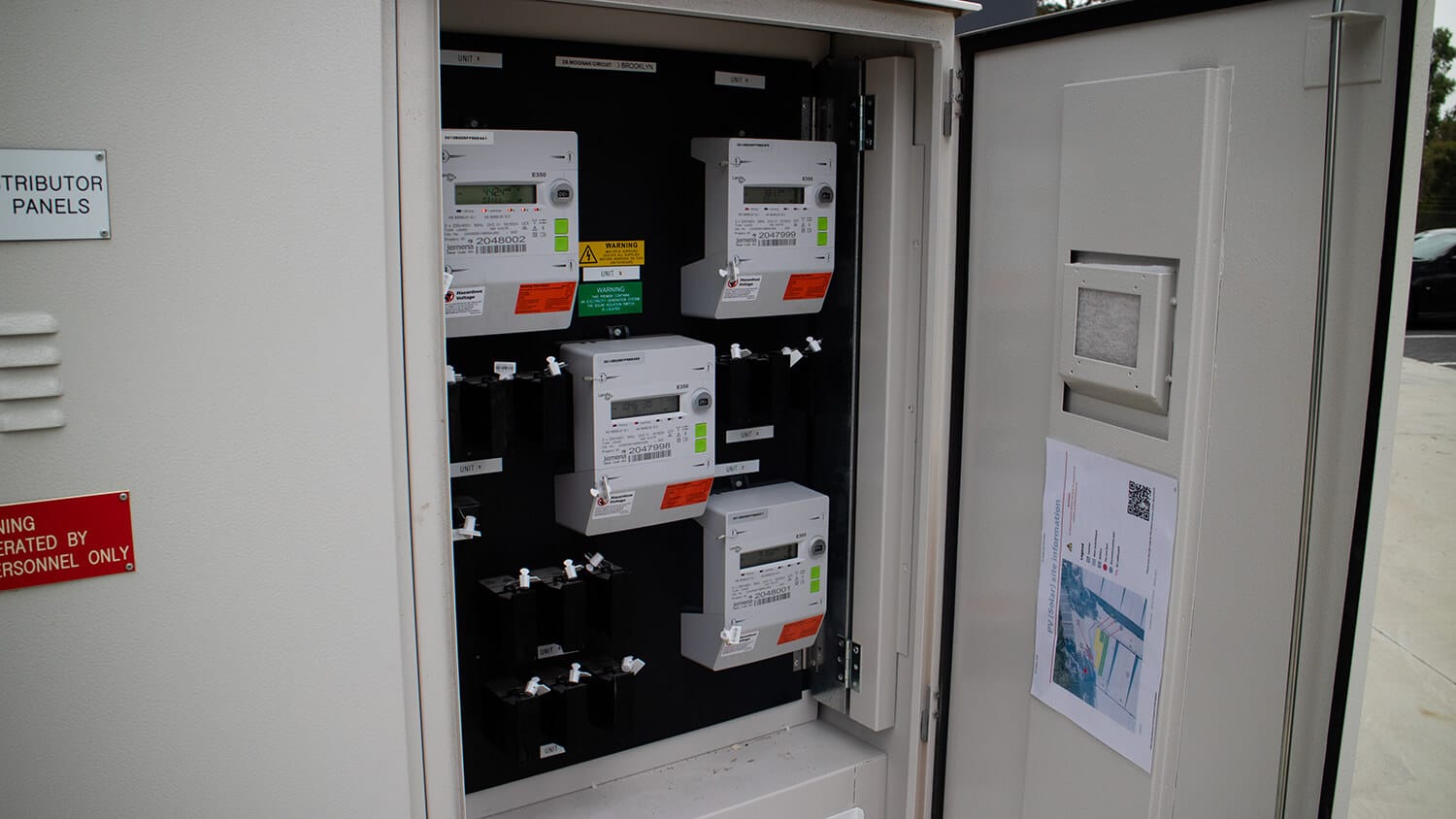
Renters and apartments. The Order has no solar or home-ownership requirement, so the account holder is who matters, not who owns the roof. Apartment owners and tenants on their own retail account and smart meter can ask their retailer. If your building runs an embedded network (a private network where the site’s operator usually buys power in bulk and on-sells it to residents, common in apartment blocks, caravan parks and retirement villages), see the FAQ below.
What you pay outside 11am to 2pm (United Energy rates)
The free window is three hours. The other 21 hours are charged at the offer’s own rates, and the daily supply charge applies every day, including on days you use only free power.
Helcro Electrical is based in Cheltenham. Cheltenham and the suburbs we serve around it, from Brighton and Caulfield to Frankston, are in the United Energy distribution zone. Your distributor is named on your bill. These are the maximum prices retailers may charge in the United Energy zone, as published by the Essential Services Commission:
| Period (every day) | Maximum price, incl. GST |
|---|---|
| Off-peak, 9pm to 11am | $0.2427 per kWh |
| Free, 11am to 2pm | $0.00 per kWh (up to 24 kWh) |
| Solar soak, 2pm to 4pm | $0.1939 per kWh |
| Peak, 4pm to 9pm | $0.4245 per kWh |
| Daily supply charge | $1.1912 per day |
United Energy zone, 1 October 2026 to 30 June 2027. General usage only: any controlled load (off-peak hot water) stays on its own tariff.
The Victorian Government set these first-year prices. They run to 30 June 2027, and the ESC sets the prices that apply from 1 July 2027, so expect them to change each year. A retailer can charge less than these maximums, never more.
What “solar soak” means on your bill. On the Midday Power Saver, solar soak is the 2pm to 4pm period, priced below the off-peak rate. It is also the most you can be charged for power used in the free window above 24 kWh. Separately, Victoria’s network tariffs have had an 11am to 4pm “solar soak” period since July 2026, and the time-of-use Victorian Default Offer uses the same 11am to 4pm period, so you may see the term on other plans too.
Who pays for the free power? Everyone on the offer does, through the other rates. The ESC told the Minister that costs incurred during the free usage period “are recovered across all other time periods of the day”. That is why the rates outside the window are higher.
Is the Midday Power Saver worth it?
It is worth it if you can move a good share of your use into 11am to 2pm; if you can’t, it can cost you more. The Victorian Government’s estimate is a saving of $149 to $428 a year for households that shift 5% to 30% of their use into 11am to 2pm. Households that charge an electric vehicle in the window could save an additional $674, which brings the top figure to $1,102 a year.
Two points the headline numbers leave out:
- What they compare against. The ESC’s figures behind the estimate compare the offer with the flat-rate Victorian Default Offer for an average household using 4,000 kWh a year. Your own plan may be cheaper or dearer than that.
- The shift is on top of what you already use at midday. The ESC’s advice to the Minister (22 May 2026) put the possible saving at $149 to $332 for a consistent 5% to 20% shift, said shifting that much “may be challenging” with typical household appliances, and said customers who cannot shift enough “could end up worse off”.
Our own check against the time-of-use default offer. Using the ESC’s published United Energy rates, every paid rate on the Midday Power Saver is about 2c per kWh higher than on the time-of-use Victorian Default Offer, and the supply charge is the same.
On those numbers you break even against that offer when about 11% of your daily use falls between 11am and 2pm, and the average metered household is already at about 11%. The saving comes from what you move into the window on top of that: the big loads such as hot water, EV charging, a battery and the pool pump.
A worked example (our calculation, United Energy rates, 4,000 kWh a year). At the average 11% midday share, a household pays about $1,496 a year on either the Midday Power Saver or the time-of-use default offer. Now move a heat pump’s daily reheat on general supply (about 2.5 kWh) from overnight into the window, and about 1 kWh a day of dishwasher and laundry out of the 4pm to 9pm peak.
On the Midday Power Saver that saves about $376 a year. The time-of-use default offer also rewards the same move with its cheaper 11am to 4pm rate, so the fair gap between the two offers is about $248 a year.
An EV doing 12,000 km a year at an assumed 15 kWh per 100 km needs about 1,800 kWh, or about 4.9 kWh a day, well inside the cap if the car is home and plugged in during the window. On the time-of-use default offer, charging between 11am and 4pm would cost about $311 a year (about $399 overnight); in the free window, nothing.
Why you may have seen bigger figures. The first announcement, on 25 March 2026, said families could save “up to $300 per year” and “up to $1,070 if they have solar panels and batteries”. Those numbers still sit on some websites. The current Victorian Government estimate is the $149 to $428 range above.
It suits you if someone is home during the day or you can run loads on timers, you have an EV you can charge at home in the middle of the day, or your hot water can be moved to the window.
Think twice and compare first if most of your use is in the evening, you cannot move your loads, or you are already on a cheap plan. The government’s free comparison service, Victorian Energy Compare, has a Midday Power Saver filter so you can check the offers against your current plan.
This is general information, not financial advice. Before you sign up, your retailer must give you a dollar estimate where practicable.
The federal Solar Sharer Offer, which runs in other states, gives an early read. The Australian Energy Council’s informal analysis (17 September 2026) counted about 10,000 sign-ups, and found about half of the customers that some retailers tracked were better off than on the retailer’s best offer.
Making the free hours work: hot water, EV, battery and appliances
Free power only saves money when something useful runs in the window. Most of the big loads in a house can be moved there with a timer or a setting, and if you are electrifying the whole house, our home electrification guide covers the bigger plan. Here is the load-by-load view from the switchboard side.
| Load | Rating | Three hours in the window |
|---|---|---|
| Heat pump hot water (Sanden Eco Plus, rated input) | 0.84 kW | about 2.5 kWh |
| Electric storage hot water element (a common size) | 3.6 kW | up to 10.8 kWh |
| Single-phase EV charger | 7 kW | 21 kWh |
| Three-phase EV charger | 11 kW | reaches 24 kWh in about 2.2 hours |
| Battery charging at 5 kW | 5 kW | up to 15 kWh |
Rating × hours. Everything on your general supply shares the one 24 kWh allowance.
Hot water on the Midday Power Saver: is yours off-peak?
If your electric hot water heats overnight on a separate meter or tariff, it is on a controlled load circuit, usually called off-peak hot water. Controlled load is outside the Midday Power Saver. The Order does not cover controlled load tariffs or require any change to them, and controlled load use is not free and does not count toward the 24 kWh. You can still take the offer for your general usage: the Order lets your controlled load stay on its existing tariff.
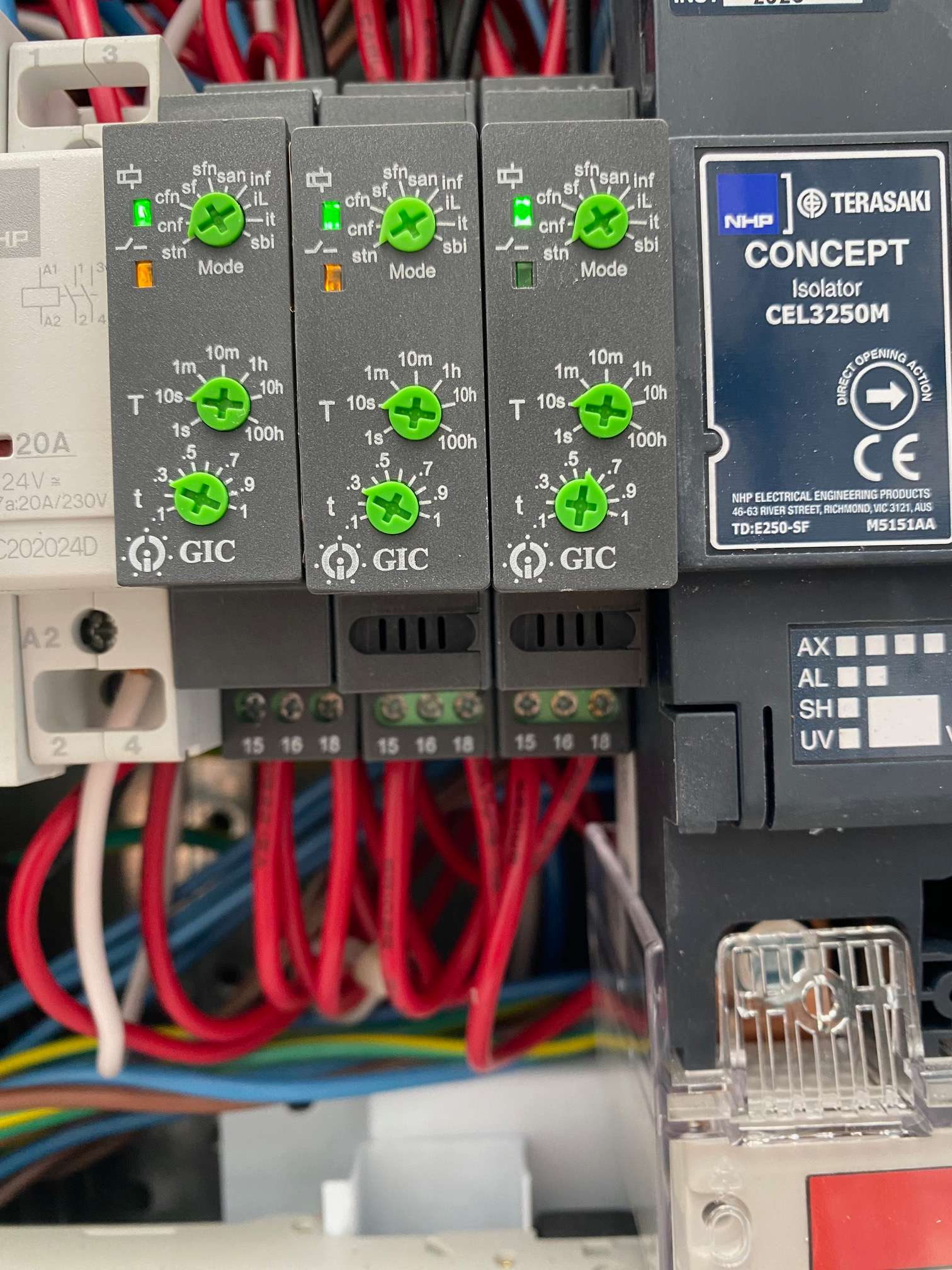
To heat that water for free, the hot water has to come off the controlled load circuit and onto your general supply, with a timer or contactor at the switchboard set to 11am to 2pm. That is switchboard work for a licensed electrician, and your retailer has to change the tariff, which can involve a change to how your meter is set up. We quote it after a $50 site visit, because the cost depends on your switchboard and meter set-up.
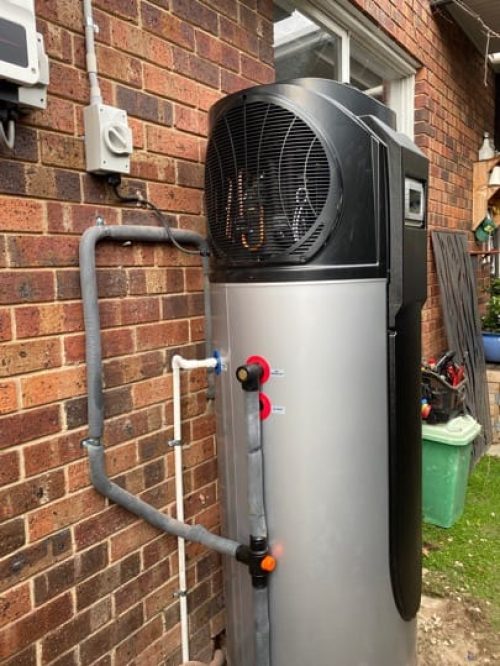
A heat pump is one of the best loads for the window: it can do most or all of its daily reheat in the middle of the day, store the hot water for the evening, and use only part of the free 24 kWh. Our guide to running a heat pump on the midday window covers the timer settings. Our heat pump vs gas hot water comparison covers the switch from gas, and our Victorian gas rules page covers what changes for gas hot water.
EV charging on the Midday Power Saver: watch the 24 kWh
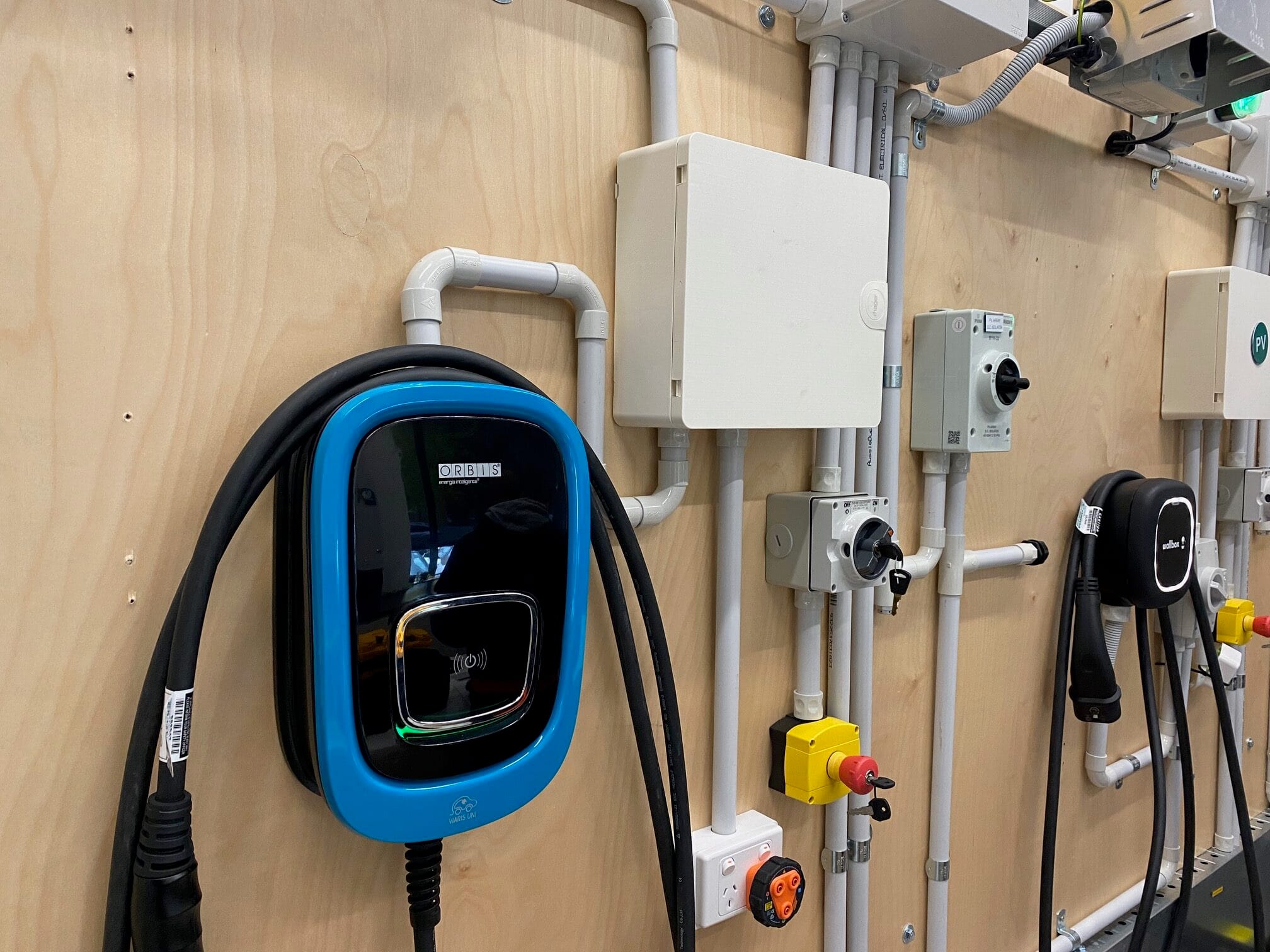
The Victorian Government lists EV chargers as very high-energy use, and an EV charger is one of the biggest loads in most homes. Power in kW multiplied by hours gives energy in kWh: a 7 kW charger running for all three hours uses 21 kWh, leaving about 3 kWh of the free 24 kWh for everything else, and the fridge and other appliances that run all day use some of that too.
An 11 kW three-phase charger uses the whole 24 kWh in a little over 2 hours. If the car charges at full rate through the window, plan the hot water and appliances around it, or set the charger to a lower rate.
A hardwired wall charger on a schedule is the reliable way to hit the window every day. We install EV chargers across Melbourne South East; a Zappi charger, supplied and installed, is typically $2,200 to $2,500 on single-phase power and $2,500 to $3,000 on three-phase, including GST. Your switchboard and cable run set the final price.
Home battery
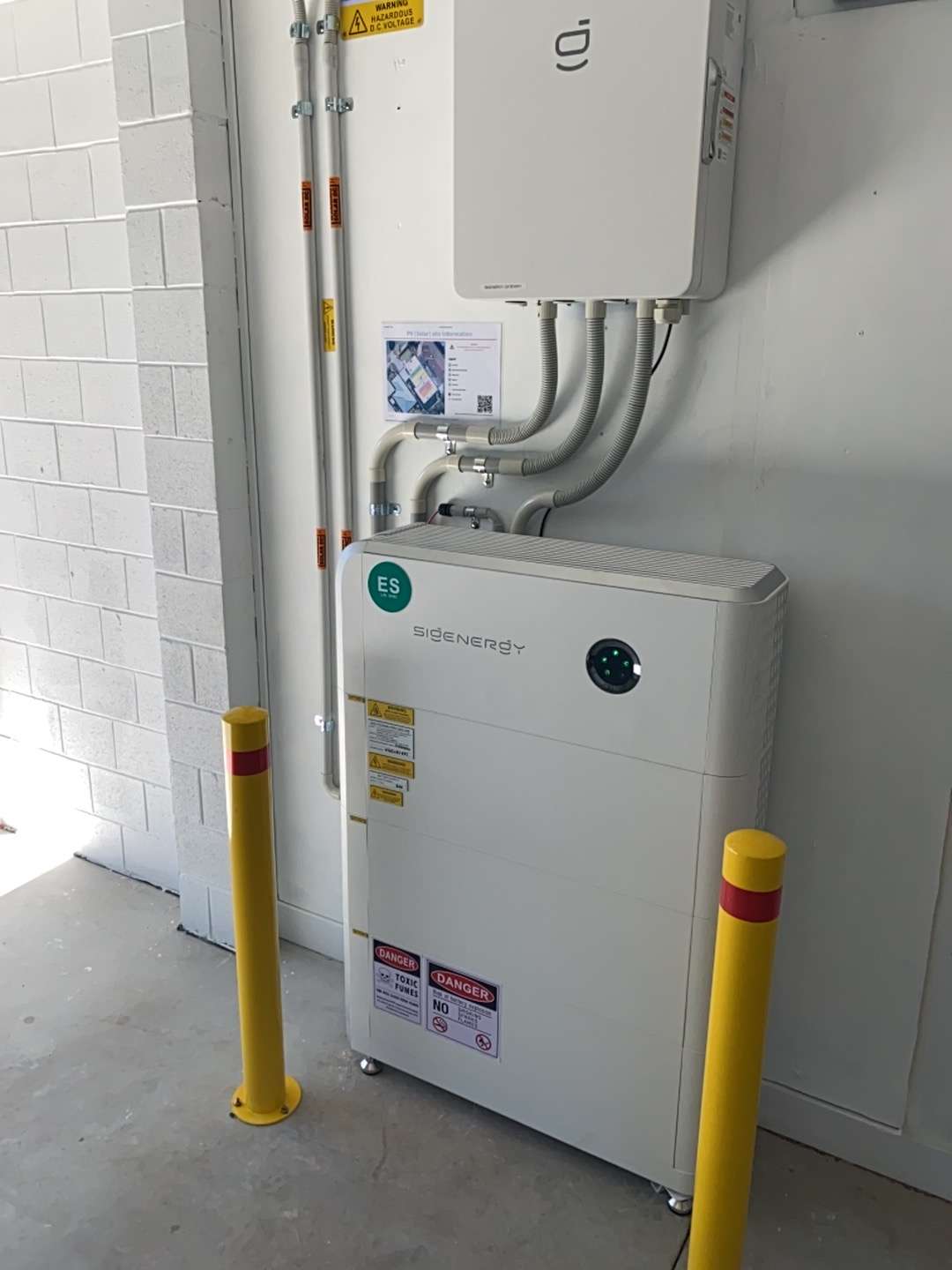
A battery can charge from the grid in the window and run the house through the 4pm to 9pm peak. How much it can take in three hours depends on its charge rate, not just its size, and its charging shares the same 24 kWh as the rest of the house. If you are adding a battery, our battery rebate guide covers the federal discount.
Cooling, heating, pool and appliances
- Reverse-cycle air conditioning: on hot days, pre-cool the house in the window, or warm it in winter, before the 4pm peak.
- Pool pump: a timer set to 11am to 2pm moves its whole daily run into the window.
- Dishwasher, washing machine and dryer: use the delay start so they run in the window even when nobody is home.
Not home during the day? Timers and scheduling are how most households use the window: the Victorian Government’s advice is that timer functions help “even when you’re not at home”. It also warns that if you are rarely home or cannot shift your use, “other energy offers may be cheaper for you”. Both are true; the deciding factor is how much you can automate.
Spread the load: switchboard and safety
Running the EV charger, battery, hot water and air conditioner all at once is the fastest way to trip a breaker or overload an old board. The Victorian Government’s advice is to stagger them across the three hours rather than running several high-energy appliances, such as batteries and EV chargers, at the same time.
It also says: “If your home has an older switchboard or wiring and you have not had an electrical safety check recently, speak with a licensed electrician before running multiple high-energy use appliances at the same time.”
That is the work Helcro Electrical does. We check the switchboard and wiring, set up the timers so the big loads take turns, and upgrade the board where it is needed. A home switchboard upgrade is typically $1,250 to $2,500 including GST, with a small board at the low end. Our residential electrical services page covers safety checks and switchboard upgrades.
Planning to run your hot water, EV charger or battery in the free hours? Call 1300 201 358 or Get a Quote and tell us what you want to run in the window. We respond within 2 business hours.
If you already have solar or a battery
Solar homes can sign up too, but the gain is smaller than the headline. On a sunny day your panels already cover much of your midday use. The Victorian Government’s advice is that solar households with an EV or a home battery can benefit further by charging them in the free window on days when solar generation is low. Without an EV or a battery, there is less to gain.
The ESC was cautious about batteries. Its advice to the Minister said battery owners already draw from the grid at the cheapest times, so their “incremental bill saving in moving onto the Midday Power Saver may not be significant”. Compare your current plan’s numbers with the offer before you switch.
Feed-in tariff. The Order does not set a feed-in tariff; your retailer’s plan does. The ESC no longer sets a minimum feed-in tariff in Victoria (there has been none since 1 July 2025), so retailers set their own, and it cannot be below zero. Check the feed-in rate on the plan’s fact sheet as well as the usage rates.
How to sign up, and how to leave
- Check your meter and your bill. You need a smart meter. Note your current rates and daily usage pattern.
- Compare. Put your details into Victorian Energy Compare and check the Midday Power Saver against your current plan. Use its Midday Power Saver filter. The site notes that changing retailers to get the offer can be more complex and take longer than getting it from your current retailer, and that depending on your tariff you may need to move to a time-varying tariff first.
- Ask your retailer for it by name. Retailers must “identify, publish and offer” it under the name “Midday Power Saver”.
Before moving you, the retailer must get your explicit informed consent and keep a record of it. Under the Order it must also tell you:
- the free period, the fair use cap and the excess charge
- the peak and off-peak rates and the supply charge
- the risk that you may pay more
- that the Victorian Default Offer is available, and where to compare offers
- a dollar estimate, where practicable
Is it automatic? The Midday Power Saver is opt-in: your retailer can’t put you on it without your consent. There are two narrow exceptions under Victoria’s Energy Retail Code of Practice. If you are getting payment-difficulty help from your retailer, or have owed $1,000 or more for at least three months, or your contract is four or more years old, your retailer can move you to a cheaper plan without your consent.
The Order allows that plan to be the Midday Power Saver, and directs the ESC to amend the Code so the Midday Power Saver can be considered and used as a “deemed best offer”. The retailer must write to you first and give you 10 business days to say no.
Leaving. If you signed up with consent, you can withdraw within 10 business days of receiving the retailer’s information, by phone or in writing, with no fee. After that, the ESC expects that as a standing offer it can be switched off at any time with no exit fees. You can also move back to the Victorian Default Offer or another plan.
Complaints. Contact your retailer first. If it is not resolved, contact the Energy and Water Ombudsman (Victoria) on 1800 500 509. The ESC deals with breaches of Victoria’s energy rules.
Midday Power Saver questions
Is it the same as the Solar Sharer?
No. The Solar Sharer Offer is a federal scheme, set through the Australian Energy Regulator’s default market offer, in New South Wales, South East Queensland and South Australia from 1 July 2026. Victoria has its own default offer and its own scheme. The ESC designed the Midday Power Saver for “consistency with the Australian Energy Regulator’s Solar Sharer Offer”. The 11am to 2pm window and the 24 kWh cap match the Solar Sharer in New South Wales and South East Queensland; South Australia’s window is 12pm to 3pm.
Can my business get it?
No. The ESC says the Midday Power Saver is not available for small business customers. It is a household offer.
I live in a building with an embedded network. Can I get it?
Possibly. The Victorian Government says customers in embedded networks may be eligible if they have a smart meter and are billed by a licensed electricity retailer, depending on their circumstances and the building’s infrastructure. Check who sends your power bill: if it is not a licensed retailer, the offer may not be available to you yet.
Where can I read the official details?
The Victorian Government’s Midday Power Saver page has the eligibility rules, FAQs and safety advice. The ESC page above has the prices for every distribution zone.
Get the most out of the free hours
Helcro Electrical is a Registered Electrical Contractor (REC 35448, registered with Energy Safe Victoria) based in Cheltenham and working across Melbourne South East, from Brighton and Bentleigh to Mentone, Parkdale and Frankston. We do the electrical work that makes the window usable: moving off-peak hot water onto a timer, heat pump hot water, EV chargers, batteries, switchboard upgrades and electrical safety checks. As a VEU Accredited Provider (A003039), we apply the VEU discount on our heat pump hot water installations.
We can’t tell you which electricity plan to choose; Victorian Energy Compare does that. We can tell you what your switchboard can carry and set the house up to use the free hours. Call 1300 201 358 or Get a Quote with your suburb and the loads you want to move. We respond within 2 business hours. Written quotes follow a $50 site visit.
How we checked this page
The rules and figures on this page come from these sources, checked on 16 October 2026:
- the Midday Power Saver Pricing Order 2026 (Victoria Government Gazette S 498, 8 September 2026)
- the Essential Services Commission’s Midday Power Saver price page, its technical paper and the ESC Chair’s letter to the Minister (22 May 2026)
- the Victorian Government’s Midday Power Saver pages on energy.vic.gov.au
- the ESC’s 2026–27 Victorian Default Offer prices, for our own comparison
- the Premier’s media releases of 25 March and 28 May 2026, the Energy Retail Code of Practice, Victorian Energy Compare and the Australian Energy Council’s 17 September 2026 analysis
The worked example and the load table are our own calculations from these rates, the Sanden Eco Plus specifications and an assumed EV use of 15 kWh per 100 km.